
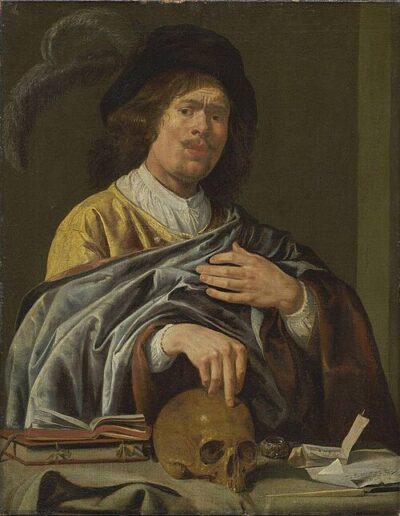
Jan Miense Molenaer
Jan Miense Molenaer was a painter from the Northern Netherlands. Born 1610, in Haarlem. Died September 19, 1668, in Haarlem. Known for The Five Senses: Touch and Battle Between Carnival and Lent.
Facts
12 facts · 0 confirmed by two sources · 6 cited · 5 from one source · 1 where the sources disagree
What’s different
- Died: we show September 19, 1668 (Sources disagree). Wikidata also lists September 15, 1668
Where this comes from
Papalocal keeps its own record. It started from these sources; what each one said is kept here as it was copied, so a change on their side never changes this page by itself. Tap one to read its version.
What Wikidata says · copied November 18, 2026 · revision 2565580977
- Described as
- painter from the Northern Netherlands (1610–1668)
- Born
- 1610 · 10 references
- Died
- September 19, 1668 · 1 reference; September 15, 1668 · 1 reference
- Born in
- Haarlem
- Died in
- Haarlem
- Citizen of
- Dutch Republic · 1 reference
- Occupation
- painter · 3 references
- Genre
- genre painting
- Known for
- The Five Senses: Touch; Battle Between Carnival and Lent
- Spouse
- Judith Leyster (1636–) · 1 reference
- Siblings
- Nicolaes Molenaer · 1 reference; Bartholomeus Molenaer · 1 reference
- Wikipedias with a page
- 21
Wikidata item Q759588 (wikidata.org/wiki/Q759588), public domain (CC0). Copied November 18, 2026.
What Wikipedia says · copied November 18, 2026 · revision 1383095659
Jan Miense Molenaer (1610 – buried 19 September 1668) was a Dutch Golden Age genre painter whose style was a precursor to Jan Steen's work during Dutch Golden Age painting. He shared a studio with his wife, Judith Leyster, also a genre painter, as well as a portraitist and painter of still-life. Both Molenaer and Leyster may have been pupils of Frans Hals.
From the Wikipedia article “Jan Miense Molenaer” (en.wikipedia.org/wiki/Jan_Miense_Molenaer), by its contributors, under CC BY-SA 4.0 (creativecommons.org/licenses/by-sa/4.0/). Copied November 18, 2026; not changed.
Confirmed Two sources agree. Cited One source, and it names where it got it. One source One source, without a reference of its own. Sources disagree The sources disagree. We show the best-supported value and keep theirs below.
