
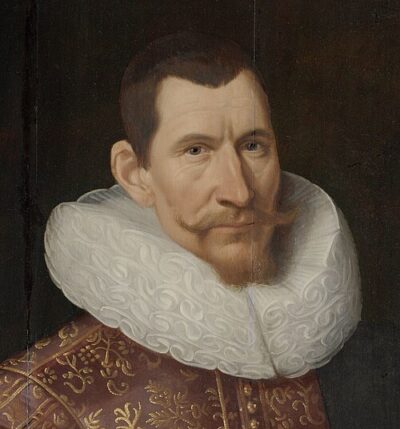
Jan Pieterszoon Coen
Jan Pieterszoon Coen was a Dutch colonial governor. Born January 8, 1587, in Hoorn. Died September 21, 1629, in Batavia. Positions held include Governor-General of the Dutch East Indies (2 times) (1618–1629).
Facts
14 facts · 2 confirmed by two sources · 5 cited · 7 from one source
Where this comes from
Papalocal keeps its own record. It started from these sources; what each one said is kept here as it was copied, so a change on their side never changes this page by itself. Tap one to read its version.
What Wikidata says · copied November 17, 2026 · revision 2565549195
- Described as
- Dutch colonial governor
- Other names
- Jan Pietersz Coen, John Peterson Coen
- Born
- January 8, 1587 · 4 references
- Died
- September 21, 1629 · 4 references
- Born in
- Hoorn · 1 reference
- Died in
- Batavia
- Citizen of
- Dutch Republic
- Occupation
- military leader; slave trader; merchant · 1 reference; governor-general · 1 reference
- Positions held
- Governor-General of the Dutch East Indies (2 times) (1618–1629)
- Spouse
- Eva Ment · 1 reference
- Religion
- Reformed Christianity; Judaism · 1 reference
- Military rank
- general
- Wikipedias with a page
- 25
Wikidata item Q470856 (wikidata.org/wiki/Q470856), public domain (CC0). Copied November 17, 2026.
What Wikipedia says · copied November 17, 2026 · revision 1364313141
Jan Pieterszoon Coen (Dutch pronunciation: [jɑn ˈpitərsoːn ˈkun]; 8 January 1587 – 21 September 1629) was a Dutch naval officer of the Dutch East India Company (VOC) in the early 17th century, serving two terms as governor-general of the Dutch East Indies. He was the founder of Batavia, capital of the Dutch East Indies. Renowned for providing the impulse that set the VOC on the path to dominance in the Dutch East Indies, he was long considered a national hero in the Netherlands. Since the 19th century, his legacy has become controversial due to the brutal violence he employed in order to secure a trade monopoly on nutmeg, mace and cloves. He led the final Dutch conquest of the Banda Islands in 1621, which culminated in the Banda massacre, which saw 2,800 Bandanese killed and 1,700 enslaved by the Dutch. This is regarded as an act of genocide and earned him the nickname of 'Butcher of Banda'.
A famous quote of his from 1618, Despair not, spare your enemies not, for God is with us, illustrates his single-minded ruthlessness, and his unstinting belief in the divinely-sanctioned nature of his project. Using such self-professed divine sanction to violently pursue his ultimate goal of a trade monopoly in the East Indies, Dutch soldiers acting on Coen's orders perpetrated numerous wanton acts of destruction in the spice islands of (now) eastern Indonesia, including the infamous Banda Massacre of 1621. The purpose of this was to gain a monopoly upon the supply of nutmeg and mace in order to sustain artificially high prices and profits for the Dutch investors in the VOC. This was deemed by many to be excessive, even for such a relatively violent age. Consequently, since Indonesia became independent he has been looked at in a more critical light, and historians view his often violent methods to have been excessive.
- Born, in its opening lines
- January 8, 1587
- Died, in its opening lines
- September 21, 1629
From the Wikipedia article “Jan Pieterszoon Coen” (en.wikipedia.org/wiki/Jan_Pieterszoon_Coen), by its contributors, under CC BY-SA 4.0 (creativecommons.org/licenses/by-sa/4.0/). Copied November 17, 2026; not changed.
Confirmed Two sources agree. Cited One source, and it names where it got it. One source One source, without a reference of its own. Sources disagree The sources disagree. We show the best-supported value and keep theirs below.
