
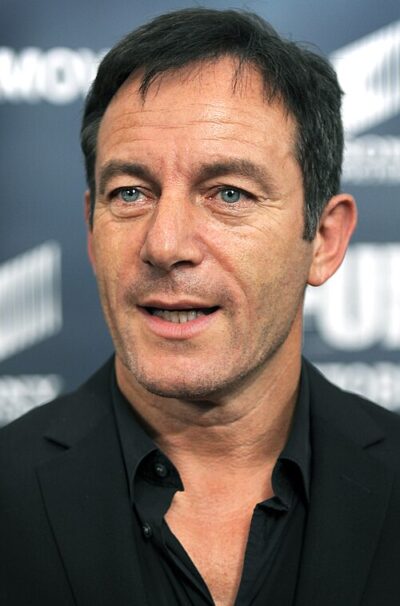
Jason Isaacs
Jason Isaacs is a British actor. Born June 6, 1963, in Liverpool. Educated at University of Bristol and Royal Central School of Speech and Drama. Awards include San Diego Film Critics Society Award for Best Supporting Actor and Satellite Award for Best Actor – Miniseries or Television Film.
Facts
18 facts · 1 confirmed by two sources · 5 cited · 12 from one source
Where this comes from
Papalocal keeps its own record. It started from these sources; what each one said is kept here as it was copied, so a change on their side never changes this page by itself. Tap one to read its version.
What Wikidata says · copied November 16, 2026 · revision 2566132190
- Described as
- British actor (born 1963)
- Other names
- Jason Michael Isaacs
- Born
- June 6, 1963 · 2 references
- Born in
- Liverpool · 1 reference
- Name at birth
- Jason Michael Isaacs
- Citizen of
- United Kingdom
- Occupation
- film actor · 1 reference; voice actor; stage actor; television actor; television producer · 1 reference; actor · 1 reference
- Education
- University of Bristol; Royal Central School of Speech and Drama · 1 reference; Haberdashers' Aske's Boys' School; King David High School
- Awards
- San Diego Film Critics Society Award for Best Supporting Actor; Satellite Award for Best Actor – Miniseries or Television Film
- Religion
- Judaism
- Height
- 1.80 m (5 ft 11 in)
- Wikipedias with a page
- 53
Wikidata item Q214223 (wikidata.org/wiki/Q214223), public domain (CC0). Copied November 16, 2026.
What Wikipedia says · copied November 16, 2026 · revision 1384531478
Jason Michael Isaacs (born 6 June 1963) is an English actor. Primarily known for his character actor roles and in particular portrayals of villains in both independent films and blockbusters, he has received various accolades including an Empire Award and an Independent Spirit Award, with nominations for a British Academy Film Award, a Primetime Emmy Award, two Satellite Awards and two Golden Globe Awards.
He is best known for portraying Lucius Malfoy in the Harry Potter film series (2002–2011), Ronald Quincy in Armageddon (1998), Colonel William Tavington in The Patriot (2000), Michael D. Steele in Black Hawk Down (2001), D.J in Event Horizon (1997), Timothy Ratliff in The White Lotus (2025) and Captain Waggoner in Fury (2014).
Other television roles include Michael Caffee in the Showtime crime drama series Brotherhood (2006–2008), Michael Britten in police procedural fantasy NBC series Awake (2012), Dr. Hunter Aloysius "Hap" Percy in the Netflix supernatural mystery drama series The OA (2016–2019), Captain Gabriel Lorca in Star Trek: Discovery (2017–2018). With his role in the third season of the HBO anthology series The White Lotus (2025), he was nominated for the Primetime Emmy Award for Outstanding Supporting Actor in a Drama Series and a Golden Globe Award. He was also nominated for the Golden Globe Award for Best Actor – Miniseries or Television Film for The State Within (2006) and for the British Academy Television Award for Best Actor for his portrayal of Harry H. Corbett in The Curse of Steptoe (2008), and for the International Emmy Award for Best Actor for Case Histories (2011–2013).
His voice acting roles include Admiral Zhao in the first season of Avatar: The Last Airbender (2005), the Grand Inquisitor / Sentinel in Star Wars Rebels (2014–2016), Lord Enver Gortash in the video game Baldur's Gate 3 (2023), and Eminence in the third season of the Marvel Cinematic Universe television series What If...? (2024).
Isaacs has appeared on stage as Louis Ironson in Declan Donnellan's 1992 and 1993 Royal National Theatre premiere of Tony Kushner's Pulitzer Prize-winning play Angels in America: A Gay Fantasia on National Themes, and as hitman Ben in a 2007 revival of Harold Pinter's 1957 play The Dumb Waiter at Trafalgar Studios in the West End.
- Born, in its opening lines
- June 6, 1963
From the Wikipedia article “Jason Isaacs” (en.wikipedia.org/wiki/Jason_Isaacs), by its contributors, under CC BY-SA 4.0 (creativecommons.org/licenses/by-sa/4.0/). Copied November 16, 2026; not changed.
Confirmed Two sources agree. Cited One source, and it names where it got it. One source One source, without a reference of its own. Sources disagree The sources disagree. We show the best-supported value and keep theirs below.
