
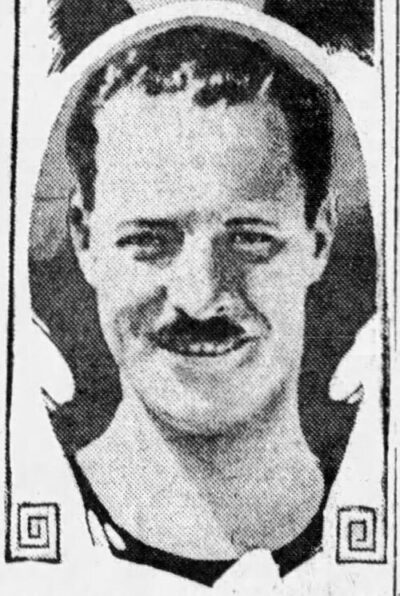
Jay O'Brien was a bobsledder. Born February 22, 1883, in New York City. Died April 5, 1940, in Palm Beach.
Facts
12 facts · 2 confirmed by two sources · 0 cited · 10 from one source
Where this comes from
Papalocal keeps its own record. It started from these sources; what each one said is kept here as it was copied, so a change on their side never changes this page by itself. Tap one to read its version.
What Wikidata says · copied November 18, 2026 · revision 2554011193
- Described as
- bobsledder (1883-1940)
- Born
- February 22, 1883 · 1 reference
- Died
- April 5, 1940 · 1 reference
- Born in
- New York City
- Died in
- Palm Beach
- Cause of death
- myocardial infarction
- Citizen of
- United States
- Occupation
- bobsledder
- Sport
- bobsleigh
- Spouse
- Laura Hylan O'Brien; Mae Murray; Irene Fenwick
- Father
- Miles M. O'Brien
- Wikipedias with a page
- 17
Wikidata item Q1384340 (wikidata.org/wiki/Q1384340), public domain (CC0). Copied November 18, 2026.
What Wikipedia says · copied November 18, 2026 · revision 1382957338
Jay James O'Brien (February 22, 1883 – April 5, 1940) was an American bobsledder who competed in the late 1920s and early 1930s. He won two medals at the Winter Olympics with a gold in the four-man event at Lake Placid, New York, in 1932 and a silver in the five-man event at St. Moritz in 1928. At 48 years old, he was the oldest Olympic champion.
O'Brien was also a jockey, and was head of the United States Olympic Bobsled Committee at the time of the 1932 Winter Olympics in Lake Placid. He died of a heart attack in 1940.
- Born, in its opening lines
- February 22, 1883
- Died, in its opening lines
- April 5, 1940
From the Wikipedia article “Jay O'Brien (bobsleigh)” (en.wikipedia.org/wiki/Jay_O'Brien_(bobsleigh)), by its contributors, under CC BY-SA 4.0 (creativecommons.org/licenses/by-sa/4.0/). Copied November 18, 2026; not changed.
Confirmed Two sources agree. Cited One source, and it names where it got it. One source One source, without a reference of its own. Sources disagree The sources disagree. We show the best-supported value and keep theirs below.
