
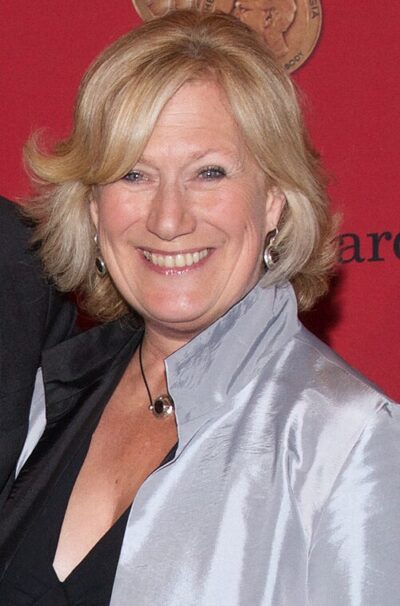
Jayne Atkinson
Jayne Atkinson is a British actress. Born February 18, 1959, in Bournemouth. Educated at Yale School of Drama and Northwestern University.
Facts
15 facts · 1 confirmed by two sources · 2 cited · 12 from one source
Where this comes from
Papalocal keeps its own record. It started from these sources; what each one said is kept here as it was copied, so a change on their side never changes this page by itself. Tap one to read its version.
What Wikidata says · copied November 15, 2026 · revision 2552693101
- Described as
- British actress
- Born
- February 18, 1959 · 3 references
- Born in
- Bournemouth
- Citizen of
- United States; United Kingdom
- Occupation
- television actor; film actor; actor · 1 reference; stage actor
- Education
- Yale School of Drama; Northwestern University; Northwestern University School of Communication; Pine Crest School · 1 reference
- Field
- acting · 1 reference
- Spouse
- Michel Gill (1998–)
- Website
- http://www.jayne-atkinson.com/
- Wikipedias with a page
- 27
Wikidata item Q455188 (wikidata.org/wiki/Q455188), public domain (CC0). Copied November 15, 2026.
What Wikipedia says · copied November 15, 2026 · revision 1382189150
Jayne Atkinson (born 18 February 1959) is a British-American actress. She is best known for the role of Karen Hayes on 24, as well as her Tony Award–nominated roles in The Rainmaker and Enchanted April. She has also appeared in Criminal Minds as BAU Section Chief Erin Strauss, Madam Secretary as United States Vice President Teresa Hurst, and House of Cards as U.S. Secretary of State Catherine Durant. In films, Atkinson notably played foster mother Annie Greenwood in the Free Willy franchise.
- Born, in its opening lines
- February 18, 1959
From the Wikipedia article “Jayne Atkinson” (en.wikipedia.org/wiki/Jayne_Atkinson), by its contributors, under CC BY-SA 4.0 (creativecommons.org/licenses/by-sa/4.0/). Copied November 15, 2026; not changed.
Confirmed Two sources agree. Cited One source, and it names where it got it. One source One source, without a reference of its own. Sources disagree The sources disagree. We show the best-supported value and keep theirs below.
