
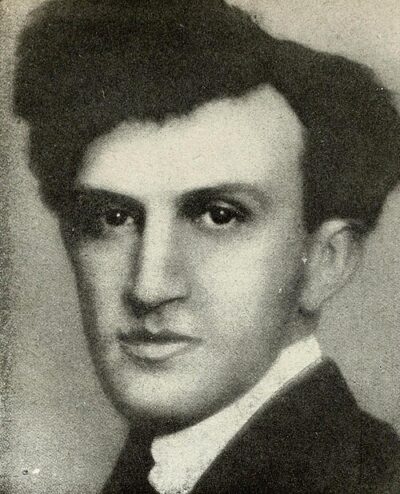
Jean Epstein
Jean Epstein was a French film director, essayist and novelist. Born March 25, 1897, in Warsaw. Died April 2, 1953, in Paris.
Facts
14 facts · 2 confirmed by two sources · 7 cited · 5 from one source
Where this comes from
Papalocal keeps its own record. It started from these sources; what each one said is kept here as it was copied, so a change on their side never changes this page by itself. Tap one to read its version.
What Wikidata says · copied November 16, 2026 · revision 2557957715
- Described as
- French film director, essayist and novelist (1897–1953)
- Born
- March 25, 1897 · 4 references
- Died
- April 2, 1953 · 6 references
- Born in
- Warsaw · 2 references
- Died in
- Paris · 2 references
- Cause of death
- cerebrovascular disease
- Citizen of
- France · 1 reference
- Occupation
- film director · 1 reference; screenwriter; writer · 1 reference; literary critic · 1 reference; film critic · 1 reference; filmmaker · 1 reference; director · 1 reference
- Genre
- French Impressionist Cinema · 1 reference
- Wikipedias with a page
- 40
Wikidata item Q456968 (wikidata.org/wiki/Q456968), public domain (CC0). Copied November 16, 2026.
What Wikipedia says · copied November 16, 2026 · revision 1382301550
Jean Epstein (French: [ʒɑ̃ ɛpʃtajn]; 25 March 1897 – 2 April 1953) was a French filmmaker, film theorist, literary critic, and novelist. Although he is remembered today primarily for his adaptation of Edgar Allan Poe's The Fall of the House of Usher, he directed three dozen films and was an influential critic of literature and film from the early 1920s through the late 1940s. He is often associated with French Impressionist Cinema and the concept of photogénie.
- Born, in its opening lines
- March 25, 1897
- Died, in its opening lines
- April 2, 1953
From the Wikipedia article “Jean Epstein” (en.wikipedia.org/wiki/Jean_Epstein), by its contributors, under CC BY-SA 4.0 (creativecommons.org/licenses/by-sa/4.0/). Copied November 16, 2026; not changed.
Confirmed Two sources agree. Cited One source, and it names where it got it. One source One source, without a reference of its own. Sources disagree The sources disagree. We show the best-supported value and keep theirs below.
