
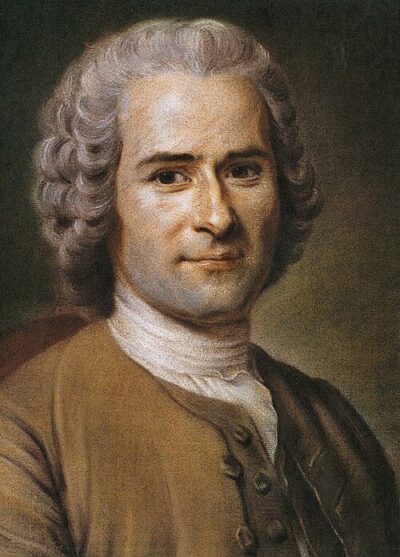
Jean-Jacques Rousseau
Jean-Jacques Rousseau was a Genevan philosopher, writer, and composer. Born June 28, 1712, in Geneva. Died July 2, 1778, in Ermenonville. Known for Emile, or On Education, The Social Contract and Julie, or the New Heloise.
Facts
28 facts · 2 confirmed by two sources · 10 cited · 15 from one source · 1 where the sources disagree
What’s different
- Buried in: we show cenotaph of Jean-Jacques Rousseau (1780–1794) (Sources disagree). Wikidata also lists Panthéon and île des Peupliers
Where this comes from
Papalocal keeps its own record. It started from these sources; what each one said is kept here as it was copied, so a change on their side never changes this page by itself. Tap one to read its version.
What Wikidata says · copied November 16, 2026 · revision 2566065253
- Described as
- Genevan philosopher, writer, and composer (1712-1778)
- Other names
- Citizen of Geneva, Jean Jacques Rousseau, JJ Rousseau, J.J. Rousseau, J. J. Rousseau, Rousseau
- Born
- June 28, 1712 · 19 references
- Died
- July 2, 1778 · 20 references
- Born in
- Geneva · 5 references
- Died in
- Ermenonville · 3 references
- Buried in
- cenotaph of Jean-Jacques Rousseau (1780–1794); Panthéon; île des Peupliers (1778–1794)
- Cause of death
- cardiac arrest
- Citizen of
- Republic of Geneva · 1 reference
- Occupation
- philosopher · 2 references; classical composer · 1 reference; musicologist · 1 reference; novelist · 1 reference; autobiographer; pedagogue · 1 reference; naturalist; playwright · 1 reference
- Known for
- Emile, or On Education; The Social Contract; Julie, or the New Heloise; Confessions
- Field
- botany
- Spouse
- Thérèse Levasseur (1768–1778) · 1 reference
- Father
- Isaac Rousseau · 1 reference
- Mother
- Suzanne Rousseau · 1 reference
- Siblings
- François Rousseau · 1 reference
- Religion
- Protestantism (1712–) · 1 reference; Catholicism (1728–) · 1 reference
- Lived in
- Turin; Staffordshire (1766–1767)
- Wikipedias with a page
- 236
Wikidata item Q6527 (wikidata.org/wiki/Q6527), public domain (CC0). Copied November 16, 2026.
What Wikipedia says · copied November 16, 2026 · revision 1383724500
Jean-Jacques Rousseau (UK: , US: ; French: [ʒɑ̃ʒak ʁuso]; 28 June 1712 – 2 July 1778) was a Genevan philosophe, writer, and composer. His political philosophy was influential during the Age of Enlightenment, as well as during the French Revolution.
Rousseau wrote Discourse on Inequality, which argues that private property is the source of social inequality, and The Social Contract, which outlines his ideas for what makes a legitimate political order. Rousseau's sentimental novel Julie, or the New Heloise (1761) was an example of his contributions to preromanticism and romanticism in fiction. His Émile, or On Education (1762) is a treatise on the place of the individual in society. Rousseau also wrote some autobiographical writings, such as the posthumously published Confessions (completed in 1770), and the unfinished Reveries of the Solitary Walker (composed 1776–1778)—,which featured an increased focus on subjectivity and introspection. He is thought to be one of the influences on the late 18th-century "Age of Sensibility."
- Born, in its opening lines
- June 28, 1712
- Died, in its opening lines
- July 2, 1778
From the Wikipedia article “Jean-Jacques Rousseau” (en.wikipedia.org/wiki/Jean-Jacques_Rousseau), by its contributors, under CC BY-SA 4.0 (creativecommons.org/licenses/by-sa/4.0/). Copied November 16, 2026; not changed.
Confirmed Two sources agree. Cited One source, and it names where it got it. One source One source, without a reference of its own. Sources disagree The sources disagree. We show the best-supported value and keep theirs below.
