
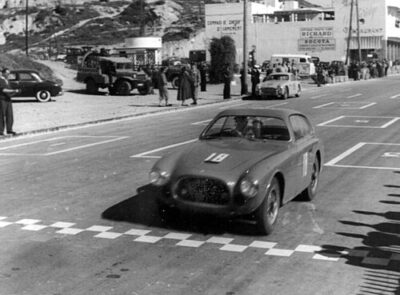
Jean Lucas
Jean Lucas was a racecar driver. Born April 25, 1917, in Le Mans. Died September 27, 2003, in Saint-Martin-de-Ré.
Facts
10 facts · 2 confirmed by two sources · 4 cited · 4 from one source
Where this comes from
Papalocal keeps its own record. It started from these sources; what each one said is kept here as it was copied, so a change on their side never changes this page by itself. Tap one to read its version.
What Wikidata says · copied November 18, 2026 · revision 2526848545
- Described as
- racecar driver (1917–2003)
- Born
- April 25, 1917 · 2 references
- Died
- September 27, 2003 · 2 references
- Born in
- Le Mans · 1 reference
- Died in
- Saint-Martin-de-Ré · 1 reference
- Name at birth
- Jean Georges Raymond Lucas · 1 reference
- Citizen of
- France
- Occupation
- engineer; racing automobile driver · 1 reference; Formula One driver
- Sport
- rallying
- Wikipedias with a page
- 20
Wikidata item Q172350 (wikidata.org/wiki/Q172350), public domain (CC0). Copied November 18, 2026.
What Wikipedia says · copied November 18, 2026 · revision 1385781415
Jean Lucas (25 April 1917 – 27 September 2003) was a French racing driver. He participated in one Formula One World Championship Grand Prix, on 11 September 1955. Lucas was then manager of the Gordini team, and when regular driver Robert Manzon was unable to race, he stepped in to take his place. His retired his car with engine failure and scored no championship points.
Lucas' best results as a driver were in sports car racing at the wheel of a Ferrari, winning at Spa-Francorchamps and Montlhéry in 1949. He retired in 1957 after a crash at the Moroccan Grand Prix.
Lucas was one of the founders of the French motorsport magazine Sport auto.
- Born, in its opening lines
- April 25, 1917
- Died, in its opening lines
- September 27, 2003
From the Wikipedia article “Jean Lucas (racing driver)” (en.wikipedia.org/wiki/Jean_Lucas_(racing_driver)), by its contributors, under CC BY-SA 4.0 (creativecommons.org/licenses/by-sa/4.0/). Copied November 18, 2026; not changed.
Confirmed Two sources agree. Cited One source, and it names where it got it. One source One source, without a reference of its own. Sources disagree The sources disagree. We show the best-supported value and keep theirs below.
