
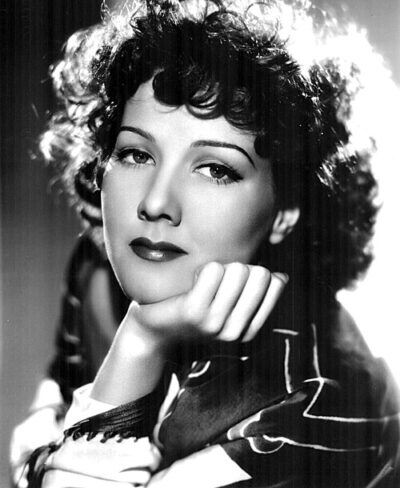
Jean Parker
Jean Parker was an American actress. Born August 11, 1915, in Deer Lodge. Died November 30, 2005, in Woodland Hills. Awards include star on Hollywood Walk of Fame.
Facts
14 facts · 2 confirmed by two sources · 2 cited · 10 from one source
What’s different
- Born: we show August 11, 1915 (Confirmed). Wikidata also lists August 11, 1916
Where this comes from
Papalocal keeps its own record. It started from these sources; what each one said is kept here as it was copied, so a change on their side never changes this page by itself. Tap one to read its version.
What Wikidata says · copied November 16, 2026 · revision 2562731665
- Described as
- American actress (1915–2005)
- Other names
- Luise Stephanie Zelinska, Lois Mae Green
- Born
- August 11, 1915 · 4 references; August 11, 1916 · 1 reference
- Died
- November 30, 2005 · 4 references
- Born in
- Deer Lodge · 1 reference
- Died in
- Woodland Hills
- Buried in
- Forest Lawn Memorial Park
- Cause of death
- stroke
- Citizen of
- United States
- Occupation
- stage actor; film actor; actor · 1 reference
- Awards
- star on Hollywood Walk of Fame · 1 reference
- Spouse
- Robert Lowery (–1957); Lee Aaron Bachler
- Lived in
- Montana
- Wikipedias with a page
- 22
Wikidata item Q436022 (wikidata.org/wiki/Q436022), public domain (CC0). Copied November 16, 2026.
What Wikipedia says · copied November 16, 2026 · revision 1362734984
Jean Parker (born Lois May Green; August 11, 1915 – November 30, 2005) was an American film and stage actress. A native of Montana, indigent during the Great Depression, she was adopted by a family in Pasadena, California, at age ten. She initially aspired to be an illustrator and artist, but was discovered at age 16 by Metro-Goldwyn-Mayer executive Louis B. Mayer after a photograph of her was published in a Los Angeles newspaper when she won a poster contest.
She made her feature film debut in the pre-code drama Divorce in the Family (1932), before being loaned to Columbia Pictures, who cast her in Frank Capra's Lady for a Day (1933). The same year, she starred as Elizabeth March in George Cukor's adaptation of Little Women opposite Katharine Hepburn, Joan Bennett, and Frances Dee. Subsequent roles included lead parts in the drama Sequoia (1934), and in the British comedy-fantasy The Ghost Goes West (1935).
Parker later starred in the Laurel and Hardy comedy The Flying Deuces (1939), followed by the sports film The Pittsburgh Kid (1941), and the film noir Dead Man's Eyes (1944), opposite Lon Chaney Jr. She made her Broadway debut in 1946, in the title role of Loco, followed by a leading role in the Broadway production of Burlesque (1946–1947) opposite Bert Lahr. In 1948, she replaced Judy Holliday for the national Broadway touring production of Garson Kanin's Born Yesterday, which earned her favorable reviews. The next year, she appeared opposite Gregory Peck in a stage production of the comedy Light Up the Sky.
By the 1950s, Parker's film career had slowed, though she continued to appear in a small number of films, including supporting parts in the Westerns The Gunfighter (1950) and Toughest Man in Arizona (1952), and the film noir Black Tuesday (1954). She gave birth to her only child, son Robert Lowery Hanks Jr., in 1952, from her fourth marriage to actor Robert Lowery. Parker made her final film appearance in 1965's Apache Uprising. She spent her later years in California, where she died of a stroke at the Motion Picture and Television Country House and Hospital in Los Angeles in 2005.
- Born, in its opening lines
- August 11, 1915
- Died, in its opening lines
- November 30, 2005
From the Wikipedia article “Jean Parker” (en.wikipedia.org/wiki/Jean_Parker), by its contributors, under CC BY-SA 4.0 (creativecommons.org/licenses/by-sa/4.0/). Copied November 16, 2026; not changed.
Confirmed Two sources agree. Cited One source, and it names where it got it. One source One source, without a reference of its own. Sources disagree The sources disagree. We show the best-supported value and keep theirs below.
