
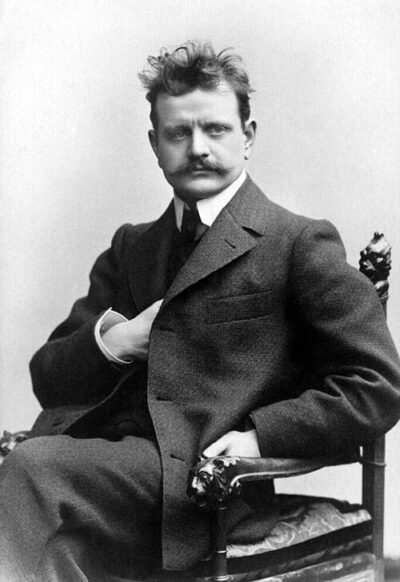
Jean Sibelius
Jean Sibelius was a Finnish composer. Born December 8, 1865, in Hämeenlinna. Died September 20, 1957, in Järvenpää. Known for Finlandia, Kullervo and Valse triste. Educated at Sibelius Academy and University of Helsinki. Awards include Grand Cross of the Order of the White Rose of Finland (2 times), Wihuri Sibelius Prize and Royal Philharmonic Society Gold Medal.
Facts
56 facts · 2 confirmed by two sources · 18 cited · 35 from one source · 1 where the sources disagree
What’s different
- Cause of death: we show cerebral hemorrhage (Sources disagree). Wikidata also lists cerebral infarction
Where this comes from
Papalocal keeps its own record. It started from these sources; what each one said is kept here as it was copied, so a change on their side never changes this page by itself. Tap one to read its version.
What Wikidata says · copied November 16, 2026 · revision 2569139441
- Described as
- Finnish composer (1865–1957)
- Other names
- Johan Julius Christian Sibelius, Jan Sibelius, Sibelius
- Born
- December 8, 1865 · 11 references
- Died
- September 20, 1957 · 11 references
- Born in
- Hämeenlinna · 6 references
- Died in
- Järvenpää · 5 references
- Cause of death
- cerebral hemorrhage; cerebral infarction
- Name at birth
- Johan Julius Christian Sibelius
- Citizen of
- Finland (1917–) · 3 references; Grand Duchy of Finland (–1917)
- Occupation
- composer · 2 references; conductor; musicologist; university teacher; violinist
- Worked for
- University of Helsinki
- Education
- Sibelius Academy (1885–1889); University of Helsinki
- Member of
- Academy of Arts of the GDR; Grand Lodge of Finland; American Academy of Arts and Sciences; Lake Tuusula Artist Community
- Genre
- classical music · 2 references; opera · 3 references; symphony; incidental music · 3 references; 20th-century classical music; art song
- Instrument
- violin; piano
- Known for
- Finlandia; Kullervo; Valse triste; Violin Concerto; Andante Festivo
- Awards
- Grand Cross of the Order of the White Rose of Finland (2 times) (1925, 1950) · 1 reference; Wihuri Sibelius Prize (1953); Royal Philharmonic Society Gold Medal (1935); Finnish Music Hall of Fame (2018) · 2 references; Goethe Medal for Art and Science (1935); commander of the Order of the Dannebrog · 1 reference; Commander First Class of the Order of the White Rose of Finland (1920) · 1 reference; Commander 1st class of the Order of Vasa (1923) · 1 reference; Commander of the Order of St. Olav · 1 reference; Grand Cross of the Order of the Dannebrog · 1 reference; Grand Officer of the Legion of Honour · 1 reference; Knight grand cross of the order of the crown of Italy · 1 reference; Honorary Member of the International Society for Contemporary Music
- Field
- music
- Spouse
- Aino Sibelius (1892–1957) · 1 reference
- Children
- Ruth Snellman; Katarina Ilves; Heidi Blomstedt
- Father
- Christian Gustaf Sibelius · 1 reference
- Mother
- Maria Charlotta Sibelius · 1 reference
- Siblings
- Christian Sibelius
- Lived in
- Ainola (1904–)
- Website
- https://sibelius.fi
- Wikipedias with a page
- 105
Wikidata item Q45682 (wikidata.org/wiki/Q45682), public domain (CC0). Copied November 16, 2026.
What Wikipedia says · copied November 16, 2026 · revision 1384624790
Jean Sibelius (; Finland Swedish: [ˈʃɑːn siˈbeːliʉs] ; born Johan Christian Julius Sibelius; 8 December 1865 – 20 September 1957) was a Finnish composer of the late Romantic and early modern periods. He is widely regarded as his country's greatest composer, and his music is often credited with having helped Finland develop a stronger national identity when the country was struggling from several attempts at Russification in the late 19th century.
The core of his oeuvre is his set of seven symphonies, which, like his other major works, are regularly performed and recorded in Finland and countries around the world. His other best-known compositions are Finlandia, the Karelia Suite, Valse triste, the Violin Concerto, the choral symphony Kullervo, and The Swan of Tuonela (from the Lemminkäinen Suite). His other works include pieces inspired by nature, Nordic mythology, and the Finnish national epic, the Kalevala; over a hundred songs for voice and piano; incidental music for numerous plays; the one-act opera The Maiden in the Tower; chamber music, piano music, Masonic ritual music, and 21 publications of choral music.
Sibelius composed prolifically until the mid-1920s, but after completing his Seventh Symphony (1924), the incidental music for The Tempest (1926), and the tone poem Tapiola (1926), he stopped producing major works in his last 30 years—a retirement commonly referred to as the "silence of Järvenpää" (the location of his home). Although he is reputed to have stopped composing, he attempted to continue writing, including abortive efforts on an eighth symphony. In later life, he wrote Masonic music and re-edited some earlier works, while retaining an active but not always favourable interest in new developments in music. Although his early retirement has perplexed scholars, Sibelius was clear about its cause—he simply felt he had written enough.
The Finnish 100 mark note featured his image until 2002, when the euro was adopted. Since 2011, Finland has celebrated a flag flying day on 8 December, the composer's birthday, also known as the Day of Finnish Music. In 2015, in celebration of the 150th anniversary of Sibelius's birth, a number of special concerts and events were held, especially in Helsinki, the Finnish capital.
- Born, in its opening lines
- December 8, 1865
- Died, in its opening lines
- September 20, 1957
From the Wikipedia article “Jean Sibelius” (en.wikipedia.org/wiki/Jean_Sibelius), by its contributors, under CC BY-SA 4.0 (creativecommons.org/licenses/by-sa/4.0/). Copied November 16, 2026; not changed.
Confirmed Two sources agree. Cited One source, and it names where it got it. One source One source, without a reference of its own. Sources disagree The sources disagree. We show the best-supported value and keep theirs below.
