
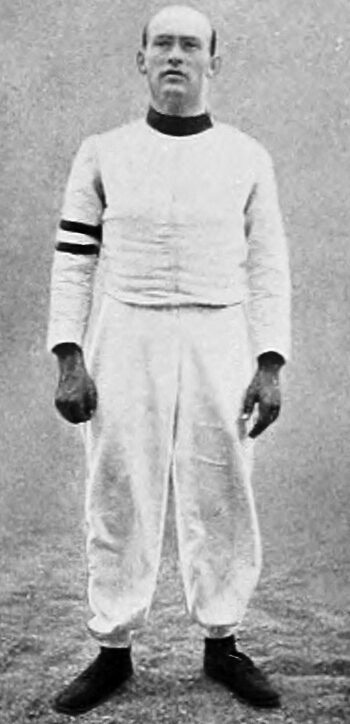
Jenő Fuchs
Jenő Fuchs was a Hungarian fencer. Born October 29, 1882, in Budapest. Died March 14, 1955, in Budapest.
Facts
8 facts · 2 confirmed by two sources · 1 cited · 5 from one source
Where this comes from
Papalocal keeps its own record. It started from these sources; what each one said is kept here as it was copied, so a change on their side never changes this page by itself. Tap one to read its version.
What Wikidata says · copied November 16, 2026 · revision 2525868596
- Described as
- Hungarian fencer (1882–1955)
- Born
- October 29, 1882
- Died
- March 14, 1955
- Born in
- Budapest
- Died in
- Budapest
- Buried in
- New Public Cemetery, Budapest · 1 reference
- Citizen of
- Hungary
- Occupation
- fencer
- Sport
- fencing
- Wikipedias with a page
- 29
Wikidata item Q453345 (wikidata.org/wiki/Q453345), public domain (CC0). Copied November 16, 2026.
What Wikipedia says · copied November 16, 2026 · revision 1361973601
Jenő Fuchs (also known as Jenő Fekete; 29 October 1882 – 14 March 1955) was a Hungarian sabre fencer. He competed at the 1908 and 1912 Olympics and won both the individual and team events at both Games. He missed the 1920 Olympics, where Hungary was not allowed to compete, and qualified for the 1924 Games but left his place in the team to younger fencers. In 1982 he was inducted into the International Jewish Sports Hall of Fame.
Fuchs studied law at the University of Budapest, defended a PhD in 1911, and became a lawyer. Apart from fencing and law, he was a top-ranked rower and bobsledder in Hungary and worked with the Budapest stock market.
- Born, in its opening lines
- October 29, 1882
- Died, in its opening lines
- March 14, 1955
From the Wikipedia article “Jenő Fuchs” (en.wikipedia.org/wiki/Jenő_Fuchs), by its contributors, under CC BY-SA 4.0 (creativecommons.org/licenses/by-sa/4.0/). Copied November 16, 2026; not changed.
Confirmed Two sources agree. Cited One source, and it names where it got it. One source One source, without a reference of its own. Sources disagree The sources disagree. We show the best-supported value and keep theirs below.
