
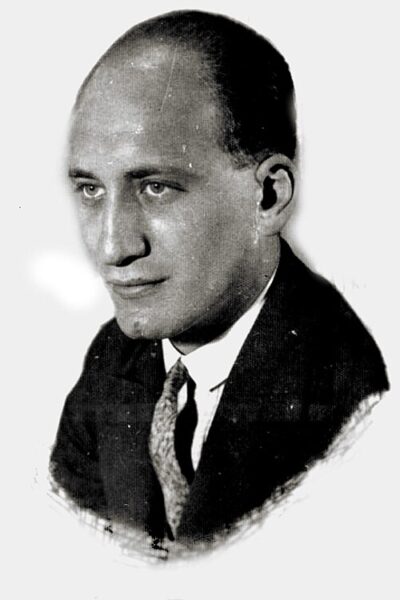
Jenő Rejtő
Jenő Rejtő was a Hungarian writer. Born March 29, 1905, in Budapest. Died January 1, 1943, in Evdakovo. Known for The Lost Cruiser, The Three Musketeers in Africa and Dirty Fred, the Captain.
Facts
19 facts · 2 confirmed by two sources · 3 cited · 13 from one source · 1 where the sources disagree
What’s different
- Cause of death: we show typhus (Sources disagree). Wikidata also lists hypothermia
Where this comes from
Papalocal keeps its own record. It started from these sources; what each one said is kept here as it was copied, so a change on their side never changes this page by itself. Tap one to read its version.
What Wikidata says · copied November 18, 2026 · revision 2568865790
- Described as
- Hungarian writer (1905–1943)
- Born
- March 29, 1905 · 2 references
- Died
- January 1, 1943 · 4 references
- Born in
- Budapest
- Died in
- Evdakovo · 1 reference
- Cause of death
- typhus; hypothermia
- Name at birth
- Reich Jenő
- Citizen of
- Hungary
- Occupation
- journalist · 1 reference; writer · 2 references; science fiction writer; novelist; playwright · 1 reference
- Genre
- farce
- Known for
- The Lost Cruiser; The Three Musketeers in Africa; Dirty Fred, the Captain; The 14-Carat Roadster; The Found Cruiser; The Blonde Hurricane
- Wikipedias with a page
- 21
Wikidata item Q128714 (wikidata.org/wiki/Q128714), public domain (CC0). Copied November 18, 2026.
What Wikipedia says · copied November 18, 2026 · revision 1371736195
Jenő Rejtő (29 March 1905 - 1 January 1943) was a Hungarian interwar journalist, pulp fiction writer and playwright, famous in Hungary for his books and novellas - adventure and detective novels and parodies of these genres, characterized by a unique sense of absurd humour. He died in a labour camp during World War II.
- Born, in its opening lines
- March 29, 1905
- Died, in its opening lines
- January 1, 1943
From the Wikipedia article “Jenő Rejtő” (en.wikipedia.org/wiki/Jenő_Rejtő), by its contributors, under CC BY-SA 4.0 (creativecommons.org/licenses/by-sa/4.0/). Copied November 18, 2026; not changed.
Confirmed Two sources agree. Cited One source, and it names where it got it. One source One source, without a reference of its own. Sources disagree The sources disagree. We show the best-supported value and keep theirs below.
