
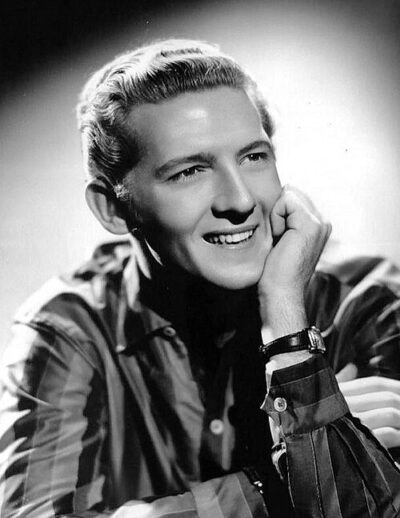
Jerry Lee Lewis
Jerry Lee Lewis was an American rock 'n' roll musician. Born September 29, 1935, in Ferriday. Died October 28, 2022, in Nesbit. Educated at Nelson University. Awards include Grammy Lifetime Achievement Award, star on Hollywood Walk of Fame and Rock and Roll Hall of Fame.
Facts
46 facts · 2 confirmed by two sources · 11 cited · 33 from one source
Where this comes from
Papalocal keeps its own record. It started from these sources; what each one said is kept here as it was copied, so a change on their side never changes this page by itself. Tap one to read its version.
What Wikidata says · copied November 13, 2026 · revision 2568773819
- Described as
- American rock 'n' roll musician (1935–2022)
- Other names
- The Killer
- Born
- September 29, 1935 · 8 references
- Died
- October 28, 2022 · 2 references
- Born in
- Ferriday · 1 reference
- Died in
- Nesbit · 2 references
- Buried in
- Herron Family Cemetery · 2 references
- Citizen of
- United States
- Occupation
- singer · 1 reference; pianist · 1 reference; composer; singer-songwriter; recording artist · 1 reference; musician · 1 reference; bandleader · 1 reference
- Education
- Nelson University
- Member of
- Million Dollar Quartet
- Genre
- rock music; blues; country music; rockabilly; honky tonk; gospel music
- Instrument
- piano; voice
- Record label
- Sun Records; Charly Records; Mercury Records; Elektra; MCA Records; Smash Records
- Awards
- Grammy Lifetime Achievement Award (2005); star on Hollywood Walk of Fame · 1 reference; Rock and Roll Hall of Fame (1986) · 1 reference
- Field
- music · 1 reference; country music · 1 reference; rock and roll · 1 reference
- Spouse
- Dorothy Barton (1952–1953) · 1 reference; Jane Mitchum (1953–1957) · 1 reference; Myra Gale Brown (1957–1970) · 2 references; Jaren Elizabeth Gunn Pate (1971–1982) · 1 reference; Shawn Stephens (1983) · 1 reference; Karrie McCarver (1984–2005) · 1 reference
- Siblings
- Linda Gail Lewis
- Religion
- Assemblies of God
- Nickname
- The Killer · 1 reference
- Height
- 1.80 m (5 ft 11 in) · 1 reference
- Website
- https://jerryleelewis.com
- Wikipedias with a page
- 66
Wikidata item Q202729 (wikidata.org/wiki/Q202729), public domain (CC0). Copied November 13, 2026.
What Wikipedia says · copied November 13, 2026 · revision 1375560272
Jerry Lee Lewis (September 29, 1935 – October 28, 2022) was an American country music and rock and roll pianist, singer, and songwriter. Nicknamed "The Killer", he was described as "rock 'n' roll's first great wild man". A pioneer of rock and roll and rockabilly music, Lewis made his first recordings in 1952 at Cosimo Matassa's J&M Studio in New Orleans, Louisiana, and early recordings in 1956 at Sun Records in Memphis, Tennessee. He later became known for his chart topping country music recordings from the 1960s and 1970s. "Crazy Arms" sold 300,000 copies in the Southern United States, but his 1957 hit "Whole Lotta Shakin' Goin' On" shot Lewis to worldwide fame. He followed this with the major hits "Great Balls of Fire", "Breathless", and "High School Confidential".
His rock and roll career faltered in the wake of his marriage to Myra Gale Brown, his 13-year-old cousin. His popularity quickly eroded following the scandal, and with few exceptions, such as a cover of Ray Charles's "What'd I Say", he did not have much chart success in the early 1960s. His live performances at this time were increasingly wild and energetic. His 1964 live album Live at the Star Club, Hamburg is regarded by many music journalists and fans as one of the wildest and greatest live rock albums ever. In 1968, Lewis made a transition into country music, and had hits with songs such as "Another Place, Another Time". This reignited his career, and throughout the late 1960s and 1970s, he regularly topped the country-western charts; throughout his seven-decade career, Lewis had 30 songs reach the top 10 on the Billboard Country and Western Chart. His number-one country hits included "To Make Love Sweeter for You", "There Must Be More to Love Than This", "Would You Take Another Chance on Me", and "Me and Bobby McGee".
Lewis's successes continued throughout the decades, and he embraced his rock and roll past with songs such as a cover of The Big Bopper's "Chantilly Lace" and Mack Vickery's "Rockin' My Life Away". In the 21st century, Lewis continued to tour worldwide and release new albums. His 2006 album Last Man Standing was his best-selling release, with over a million copies worldwide. This was followed by Mean Old Man in 2010, another of his bestselling albums.
Lewis had a dozen gold records in rock and country. He won four Grammy awards, including a Grammy Lifetime Achievement Award and two Grammy Hall of Fame Awards. Lewis was inducted into the inaugural class of the Rock and Roll Hall of Fame in 1986, and his pioneering contribution to the genre was recognized by the Rockabilly Hall of Fame. He was also a member of the inaugural class inducted into the Memphis Music Hall of Fame. He was inducted into the Country Music Hall of Fame in 2022. In 1989, his life was chronicled in the movie Great Balls of Fire, starring Dennis Quaid. In 2003, Rolling Stone listed his box set All Killer, No Filler: The Anthology at number 242 on their list of "500 Greatest Albums of All Time". In 2004, they ranked him No. 24 on their list of the 100 Greatest Artists of All Time. Lewis was the last surviving member of Sun Records' Million Dollar Quartet and the album Class of '55, which also included Johnny Cash, Carl Perkins, Roy Orbison, and Elvis Presley.
Music critic Robert Christgau said of Lewis: "His drive, his timing, his offhand vocal power, his unmistakable boogie-plus piano, and his absolute confidence in the face of the void make Jerry Lee the quintessential rock and roller."
- Born, in its opening lines
- September 29, 1935
- Died, in its opening lines
- October 28, 2022
From the Wikipedia article “Jerry Lee Lewis” (en.wikipedia.org/wiki/Jerry_Lee_Lewis), by its contributors, under CC BY-SA 4.0 (creativecommons.org/licenses/by-sa/4.0/). Copied November 13, 2026; not changed.
Confirmed Two sources agree. Cited One source, and it names where it got it. One source One source, without a reference of its own. Sources disagree The sources disagree. We show the best-supported value and keep theirs below.
