
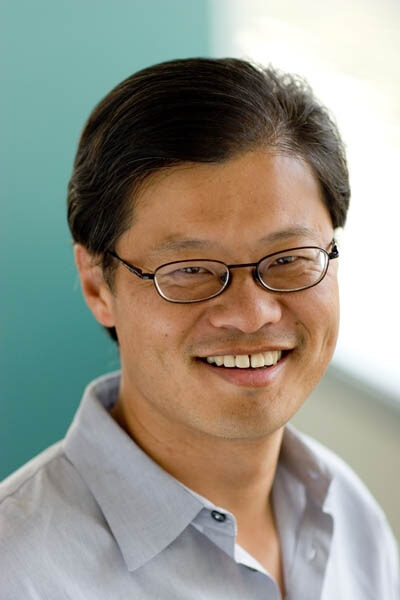
Jerry Yang
Jerry Yang is a founder of Yahoo!. Born November 6, 1968, in Taipei. Known for Yahoo. Educated at Stanford University and Piedmont Hills High School. Awards include Great Immigrants Award.
Facts
16 facts · 1 confirmed by two sources · 10 cited · 5 from one source
Where this comes from
Papalocal keeps its own record. It started from these sources; what each one said is kept here as it was copied, so a change on their side never changes this page by itself. Tap one to read its version.
What Wikidata says · copied November 13, 2026 · revision 2568632341
- Described as
- founder of Yahoo!
- Other names
- Jerry Chih-Yuan Yang
- Born
- November 6, 1968 · 2 references
- Born in
- Taipei · 2 references
- Citizen of
- United States
- Occupation
- entrepreneur · 1 reference; computer scientist; businessperson; art collector · 2 references; engineer · 1 reference
- Education
- Stanford University · 2 references; Piedmont Hills High School
- Member of
- Committee of 100 · 1 reference; board of directors (2005–) · 1 reference
- Known for
- Yahoo · 2 references
- Awards
- Great Immigrants Award (2007) · 1 reference
- Spouse
- Akiko Yamazaki · 2 references
- Lived in
- Los Altos Hills
- Wikipedias with a page
- 43
Wikidata item Q215284 (wikidata.org/wiki/Q215284), public domain (CC0). Copied November 13, 2026.
What Wikipedia says · copied November 13, 2026 · revision 1382536236
Jerry Chih-Yuan Yang (Chinese: 楊致遠; pinyin: Yáng Zhìyuǎn; born Yang Chih-Yuan; November 6, 1968) is a Taiwanese-born American billionaire computer programmer, internet entrepreneur, and venture capitalist. He is the co-founder and former CEO of Yahoo! Inc. and founding partner of AME Cloud Ventures. As of May 2025, Yang has a net worth of $3.1 billion.
- Born, in its opening lines
- November 6, 1968
From the Wikipedia article “Jerry Yang” (en.wikipedia.org/wiki/Jerry_Yang), by its contributors, under CC BY-SA 4.0 (creativecommons.org/licenses/by-sa/4.0/). Copied November 13, 2026; not changed.
Confirmed Two sources agree. Cited One source, and it names where it got it. One source One source, without a reference of its own. Sources disagree The sources disagree. We show the best-supported value and keep theirs below.
