
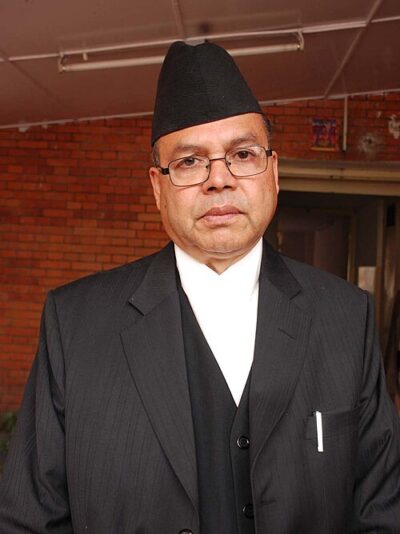
Jhala Nath Khanal
Jhala Nath Khanal is a Nepalese politician. Born May 20, 1950, in Kathmandu. Positions held include Member of the 2nd Constituent Assembly of Nepal (2013–2017) and Prime Minister of Nepal (2011). Educated at Amrit Science College.
Facts
10 facts · 1 confirmed by two sources · 1 cited · 8 from one source
Where this comes from
Papalocal keeps its own record. It started from these sources; what each one said is kept here as it was copied, so a change on their side never changes this page by itself. Tap one to read its version.
What Wikidata says · copied November 16, 2026 · revision 2562749024
- Described as
- Nepalese politician
- Born
- May 20, 1950
- Born in
- Kathmandu
- Citizen of
- Nepal
- Occupation
- politician · 1 reference
- Positions held
- Member of the 2nd Constituent Assembly of Nepal (2013–2017); Prime Minister of Nepal (2011) · 1 reference
- Political party
- Communist Party of Nepal (Unified Socialist)
- Education
- Amrit Science College
- Religion
- Hinduism
- Website
- http://jnkhanal.com/
- Wikipedias with a page
- 35
Wikidata item Q57819 (wikidata.org/wiki/Q57819), public domain (CC0). Copied November 16, 2026.
What Wikipedia says · copied November 16, 2026 · revision 1375167415
Jhala Nath Khanal (Nepali: झलनाथ खनाल, [d͡zʱʌlʌˈnatʰ ˈkʰʌnal] ; born 20 May 1950) is a Nepalese politician who was the 35th Prime Minister of Nepal from February 2011 to August 2011. He was previously the chairman of the CPN (UML) and Leader of the Constituent Assembly Parliamentary Party of the CPN (UML).
Since 5 November 2025, he has been serving as the senior leader of the Nepali Communist Party, a new party formed through merger of eight different communist parties and splinter groups.
- Born, in its opening lines
- May 20, 1950
From the Wikipedia article “Jhala Nath Khanal” (en.wikipedia.org/wiki/Jhala_Nath_Khanal), by its contributors, under CC BY-SA 4.0 (creativecommons.org/licenses/by-sa/4.0/). Copied November 16, 2026; not changed.
Confirmed Two sources agree. Cited One source, and it names where it got it. One source One source, without a reference of its own. Sources disagree The sources disagree. We show the best-supported value and keep theirs below.
