
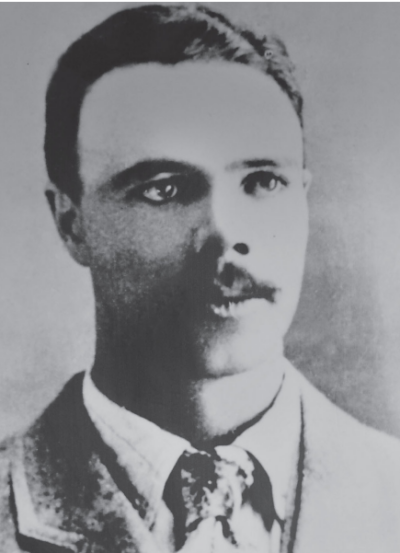
Jim Corbett
Jim Corbett was a British hunter, tracker, naturalist and author. Born July 25, 1875, in Nainital. Died April 19, 1955, in Nyeri.
Facts
16 facts · 2 confirmed by two sources · 6 cited · 8 from one source
Where this comes from
Papalocal keeps its own record. It started from these sources; what each one said is kept here as it was copied, so a change on their side never changes this page by itself. Tap one to read its version.
What Wikidata says · copied November 16, 2026 · revision 2567057301
- Described as
- British hunter, tracker, naturalist and author (1875-1955)
- Other names
- Edward James Corbett
- Born
- July 25, 1875 · 1 reference
- Died
- April 19, 1955 · 1 reference
- Born in
- Nainital · 1 reference
- Died in
- Nyeri · 1 reference
- Buried in
- Nyeri
- Citizen of
- United Kingdom; United Kingdom of Great Britain and Ireland (–1927)
- Occupation
- writer · 1 reference; hunter · 1 reference; naturalist; military personnel · 1 reference; conservationist · 1 reference
- Genre
- short novel · 1 reference
- Military branch
- British Indian Army
- Lived in
- Nainital
- Website
- http://www.respectance.com/JIM_CORBETT · 1 reference
- Wikipedias with a page
- 42
Wikidata item Q468312 (wikidata.org/wiki/Q468312), public domain (CC0). Copied November 16, 2026.
What Wikipedia says · copied November 16, 2026 · revision 1380658338
Edward James Corbett (25 July 1875 – 19 April 1955) was an Anglo-Indian hunter and author. He gained fame through hunting and killing several man-eating tigers and leopards in Northern India, as detailed in his bestselling 1944 memoir Man-Eaters of Kumaon. In his later years, he became an outspoken advocate of the nascent conservation movement.
Born in Nainital, Corbett explored and hunted in the jungles of India in childhood. He shot his first man-eater in 1907 and continued to hunt and kill such animals over the next four decades. Animals such as the Champawat Tiger, the Leopard of Rudraprayag, and the Panar Leopard had taken hundreds of victims in the divisions of Kumaon and Garhwal, before their deaths at Corbett's hands. Man-Eaters of Kumaon, which detailed several such hunts, became an international bestseller; it was followed by several other books and was adapted into a 1948 Hollywood film. Corbett increasingly disdained what he saw as the rapacious extermination of India's forests and wildlife, and fervently promoted wildlife photography as an alternative to trophy hunting. He played a major role in the creation of India's first wildlife reserve in 1934; it was renamed Jim Corbett National Park after his death. The Indochinese tiger subspecies received the scientific name Panthera tigris corbetti in his honour.
For many years, Corbett earned a living working for the railway companies, and for twenty-two years supervised the transport of goods across the Ganges at Mokameh Ghat. During the First World War, he recruited a labour corps and commanded them on the Western Front; he also supervised the logistics of the Third Anglo-Afghan War in 1919. Returning to his home town during the interwar period, he became a prominent local landowner and businessman who also organised hunts for the elite of British India, including the then-Governor-General Lord Linlithgow, who became a close friend. Corbett served as an instructor in jungle survival for troops of the Burma campaign during the Second World War. Dismayed by the febrile atmosphere surrounding the Indian independence movement, he emigrated to Kenya in 1947, and died in Nyeri eight years later.
- Born, in its opening lines
- July 25, 1875
- Died, in its opening lines
- April 19, 1955
From the Wikipedia article “Jim Corbett” (en.wikipedia.org/wiki/Jim_Corbett), by its contributors, under CC BY-SA 4.0 (creativecommons.org/licenses/by-sa/4.0/). Copied November 16, 2026; not changed.
Confirmed Two sources agree. Cited One source, and it names where it got it. One source One source, without a reference of its own. Sources disagree The sources disagree. We show the best-supported value and keep theirs below.
