
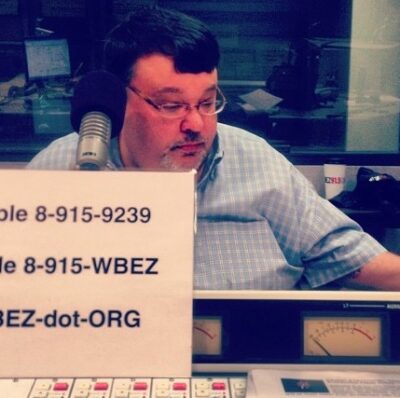
Jim DeRogatis is an American music critic. Born September 2, 1964, in Jersey City. Educated at New York University and Hudson Catholic Regional High School.
Facts
13 facts · 1 confirmed by two sources · 5 cited · 7 from one source
Where this comes from
Papalocal keeps its own record. It started from these sources; what each one said is kept here as it was copied, so a change on their side never changes this page by itself. Tap one to read its version.
What Wikidata says · copied November 18, 2026 · revision 2550708362
- Described as
- American music critic
- Other names
- James Peter DeRogatis
- Born
- September 2, 1964 · 1 reference
- Born in
- Jersey City · 1 reference
- Citizen of
- United States
- Occupation
- journalist; radio personality; music critic · 1 reference; presenter · 1 reference; music journalist · 1 reference; author · 1 reference
- Worked for
- Columbia College Chicago
- Education
- New York University; Hudson Catholic Regional High School · 1 reference
- Website
- http://jimdero.com/
- Wikipedias with a page
- 14
Wikidata item Q723229 (wikidata.org/wiki/Q723229), public domain (CC0). Copied November 18, 2026.
What Wikipedia says · copied November 18, 2026 · revision 1386222485
James Peter DeRogatis (born September 2, 1964, New Jersey, U.S.) is an American music critic and co-host of Sound Opinions. DeRogatis has written articles for magazines such as Rolling Stone, Spin, Guitar World, Matter and Modern Drummer, and for 15 years was the pop music critic for the Chicago Sun-Times.
He joined Columbia College Chicago's English Department as a lecturer in 2010 but is now a lecturer at Northwestern University's Medill School of Journalism, Media, Integrated Marketing Communications.
- Born, in its opening lines
- September 2, 1964
From the Wikipedia article “Jim DeRogatis” (en.wikipedia.org/wiki/Jim_DeRogatis), by its contributors, under CC BY-SA 4.0 (creativecommons.org/licenses/by-sa/4.0/). Copied November 18, 2026; not changed.
Confirmed Two sources agree. Cited One source, and it names where it got it. One source One source, without a reference of its own. Sources disagree The sources disagree. We show the best-supported value and keep theirs below.
