
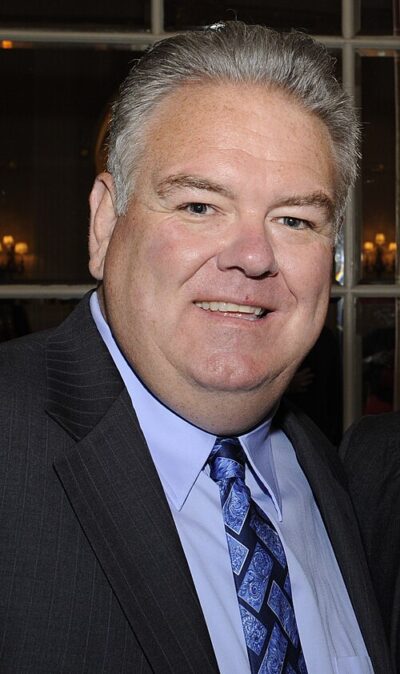
Jim O'Heir is an American actor and comedian. Born February 4, 1962, in Chicago. Educated at Thornton Fractional South High School.
Facts
7 facts · 1 confirmed by two sources · 0 cited · 6 from one source
Where this comes from
Papalocal keeps its own record. It started from these sources; what each one said is kept here as it was copied, so a change on their side never changes this page by itself. Tap one to read its version.
What Wikidata says · copied November 19, 2026 · revision 2562745765
- Described as
- American actor and comedian
- Born
- February 4, 1962
- Born in
- Chicago
- Citizen of
- United States
- Occupation
- actor; television actor
- Education
- Thornton Fractional South High School · 1 reference
- Lived in
- Los Angeles
- Wikipedias with a page
- 12
Wikidata item Q6197242 (wikidata.org/wiki/Q6197242), public domain (CC0). Copied November 19, 2026.
What Wikipedia says · copied November 19, 2026 · revision 1385909143
James O'Heir (born February 4, 1962) is an American actor and comedian. He is best known for portraying Jerry Gergich on the NBC sitcom Parks and Recreation.
O'Heir first became active in Chicago theater and improv during the late 1980s and early 1990s as part of the comedic theater troupe "White Noise", and appeared in such plays as The Book of Blanche, Stumpy's Gang and Ad-Nauseam with the group. O'Heir has appeared in several films and made guest appearances on such shows as The Drew Carey Show, Friends, Boston Legal, Malcolm in the Middle, Star Trek: Voyager, 3rd Rock from the Sun, ER, Parenthood, Brooklyn Nine-Nine, and Better Call Saul.
In 2000, he starred in the Comedy Central series Strip Mall as Harvey Krudup, the husband of protagonist Tammi Tyler, who was played by Julie Brown.
- Born, in its opening lines
- February 4, 1962
From the Wikipedia article “Jim O'Heir” (en.wikipedia.org/wiki/Jim_O'Heir), by its contributors, under CC BY-SA 4.0 (creativecommons.org/licenses/by-sa/4.0/). Copied November 19, 2026; not changed.
Confirmed Two sources agree. Cited One source, and it names where it got it. One source One source, without a reference of its own. Sources disagree The sources disagree. We show the best-supported value and keep theirs below.
