
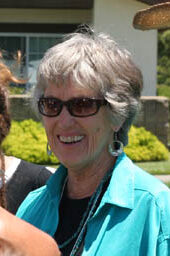
Joanna Macy
Joanna Macy was an American activist, author, and ecologist. Born May 2, 1929, in Los Angeles. Died July 19, 2025, in Berkeley. Educated at Wellesley College and Syracuse University.
Facts
19 facts · 2 confirmed by two sources · 9 cited · 8 from one source
Where this comes from
Papalocal keeps its own record. It started from these sources; what each one said is kept here as it was copied, so a change on their side never changes this page by itself. Tap one to read its version.
What Wikidata says · copied November 18, 2026 · revision 2561665942
- Described as
- American activist, author, and ecologist (1929–2025)
- Other names
- Joanna Rogers Macy
- Born
- May 2, 1929 · 1 reference
- Died
- July 19, 2025 · 1 reference
- Born in
- Los Angeles · 1 reference
- Died in
- Berkeley · 1 reference
- Name at birth
- Mary Joanne Rogers · 1 reference
- Citizen of
- United States
- Occupation
- ecologist · 1 reference; writer; university teacher; religious studies scholar · 1 reference
- Education
- Wellesley College; Syracuse University (–1978)
- Field
- deep ecology; ecopsychology; religious studies · 1 reference; literature · 1 reference; environmentalism · 1 reference; Buddhism · 1 reference
- Website
- https://joannamacy.net
- Wikipedias with a page
- 17
Wikidata item Q4964805 (wikidata.org/wiki/Q4964805), public domain (CC0). Copied November 18, 2026.
What Wikipedia says · copied November 18, 2026 · revision 1371738165
Mary Joanne Rogers Macy (May 2, 1929 – July 19, 2025), known as Joanna Macy, was an American environmental activist, author and scholar of Buddhism, general systems theory and deep ecology. She was married to Francis Underhill Macy, the activist and Russian scholar who founded the Center for Safe Energy.
- Born, in its opening lines
- May 2, 1929
- Died, in its opening lines
- July 19, 2025
From the Wikipedia article “Joanna Macy” (en.wikipedia.org/wiki/Joanna_Macy), by its contributors, under CC BY-SA 4.0 (creativecommons.org/licenses/by-sa/4.0/). Copied November 18, 2026; not changed.
Confirmed Two sources agree. Cited One source, and it names where it got it. One source One source, without a reference of its own. Sources disagree The sources disagree. We show the best-supported value and keep theirs below.
