
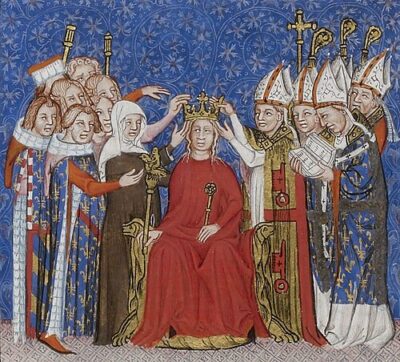
Joanna of Bourbon was a Queen of France. Born February 3, 1338, in Château de Vincennes. Died February 6, 1378, in Paris.
Facts
23 facts · 2 confirmed by two sources · 5 cited · 16 from one source
Where this comes from
Papalocal keeps its own record. It started from these sources; what each one said is kept here as it was copied, so a change on their side never changes this page by itself. Tap one to read its version.
What Wikidata says · copied November 16, 2026 · revision 2567110138
- Described as
- Queen of France
- Other names
- Jeanne de Bourbon
- Born
- February 3, 1338 · 2 references
- Died
- February 6, 1378
- Born in
- Château de Vincennes · 1 reference
- Died in
- Paris · 1 reference
- Buried in
- Basilica of Saint-Denis
- Cause of death
- puerperal disorders
- Citizen of
- France
- Occupation
- aristocrat
- Spouse
- Charles V of France (1350–1378) · 2 references
- Children
- Charles VI of France · 1 reference; Louis I, Duke of Orléans · 1 reference; Catherine of Valois, Countess of Montpensier; Jean de France; Isabelle of Valois · 1 reference; Bonne of Valois
- Father
- Peter I
- Mother
- Isabella of Valois, Duchess of Bourbon
- Siblings
- Louis II; Blanche of Bourbon; Bonne of Bourbon; Margaret of Bourbon, Lady of Albret; Marie de Bourbon
- Religion
- Christianity
- Wikipedias with a page
- 42
Wikidata item Q231794 (wikidata.org/wiki/Q231794), public domain (CC0). Copied November 16, 2026.
What Wikipedia says · copied November 16, 2026 · revision 1378081556
Joanna of Bourbon (Jeanne de Bourbon; 3 February 1338 – 6 February 1378) was Queen of France by marriage to King Charles V. She acted as his political adviser and was appointed potential regent in case of a minor regency.
- Born, in its opening lines
- February 3, 1338
- Died, in its opening lines
- February 6, 1378
From the Wikipedia article “Joanna of Bourbon” (en.wikipedia.org/wiki/Joanna_of_Bourbon), by its contributors, under CC BY-SA 4.0 (creativecommons.org/licenses/by-sa/4.0/). Copied November 16, 2026; not changed.
Confirmed Two sources agree. Cited One source, and it names where it got it. One source One source, without a reference of its own. Sources disagree The sources disagree. We show the best-supported value and keep theirs below.
