
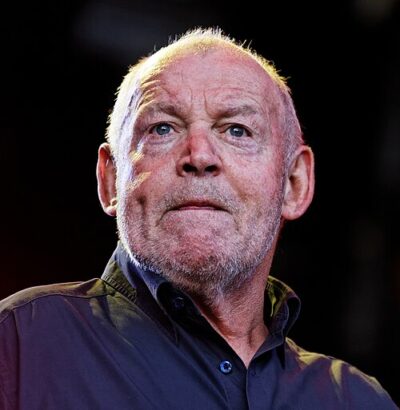
Joe Cocker
Joe Cocker was a British singer. Born May 20, 1944, in Sheffield. Died December 22, 2014, in Crawford. Educated at Sheffield Central Technical School. Awards include Officer of the Order of the British Empire and Grammy Award for Best Pop Performance by a Duo or Group with Vocals.
Facts
33 facts · 2 confirmed by two sources · 13 cited · 18 from one source
Where this comes from
Papalocal keeps its own record. It started from these sources; what each one said is kept here as it was copied, so a change on their side never changes this page by itself. Tap one to read its version.
What Wikidata says · copied November 16, 2026 · revision 2567319771
- Described as
- British singer (1944–2014)
- Other names
- John Robert Cocker
- Born
- May 20, 1944 · 9 references
- Died
- December 22, 2014 · 9 references
- Born in
- Sheffield · 2 references
- Died in
- Crawford · 2 references
- Buried in
- Garden of Memories Cemetery · 1 reference
- Cause of death
- lung cancer · 2 references
- Name at birth
- John Robert Cocker
- Citizen of
- United Kingdom
- Occupation
- singer · 1 reference; actor; songwriter; pianist; recording artist; plumber · 1 reference; musician · 1 reference
- Education
- Sheffield Central Technical School
- Genre
- blues; rock music · 1 reference
- Instrument
- piano; voice · 1 reference; harmonica
- Record label
- Regal Zonophone; A&M Records; Capitol Records; Island Records; Decca; IL
- Awards
- Officer of the Order of the British Empire; Grammy Award for Best Pop Performance by a Duo or Group with Vocals · 1 reference
- Spouse
- Pam Baker (1987–2014) · 1 reference
- Lived in
- Crawford (1994–2014) · 1 reference
- Height
- 1.74 m (5 ft 9 in) · 1 reference
- Website
- https://www.cocker.com/
- Wikipedias with a page
- 87
Wikidata item Q190076 (wikidata.org/wiki/Q190076), public domain (CC0). Copied November 16, 2026.
What Wikipedia says · copied November 16, 2026 · revision 1381844307
John Robert "Joe" Cocker (20 May 1944 – 22 December 2014) was an English singer known for his gritty, bluesy voice and dynamic stage performances that featured expressive body movements. Most of his best known singles were interpretations of songs written by others, such as "Feelin' Alright" and "Unchain My Heart", though Cocker composed original songs for most of his albums as well, often in conjunction with songwriting partner Chris Stainton.
Cocker's debut album featured a recording of the Beatles' "With a Little Help from My Friends", which was featured as its title track and brought him to near-instant stardom. The song reached number one in the UK in 1968 and became a staple of his many live shows (Woodstock and the Isle of Wight in 1969, the Party at the Palace in 2002) and was also known as the theme song for the late 1980s American TV series The Wonder Years. Cocker continued his success with his second album, which included a second Beatles song, "She Came In Through the Bathroom Window". A hastily thrown-together 1970 US tour led to the live double-album Mad Dogs & Englishmen, which featured an all-star band organised by Leon Russell. His 1974 recording of "You Are So Beautiful" reached number five in the US, and became his signature song. Cocker's best-selling song was the US number one "Up Where We Belong", a duet with American singer-songwriter Jennifer Warnes that earned a 1983 Grammy Award. He released a total of 22 studio albums over a 43-year recording career.
In 1993, Cocker was nominated for the Brit Award for Best British Male Solo Artist. He was awarded a bronze Sheffield Legends plaque in his hometown in 2007, and received an OBE the following year for services to music. Cocker was ranked number 97 on Rolling Stone's 100 greatest singers list. He was posthumously inducted into the Rock and Roll Hall of Fame in November 2025.
- Born, in its opening lines
- May 20, 1944
- Died, in its opening lines
- December 22, 2014
From the Wikipedia article “Joe Cocker” (en.wikipedia.org/wiki/Joe_Cocker), by its contributors, under CC BY-SA 4.0 (creativecommons.org/licenses/by-sa/4.0/). Copied November 16, 2026; not changed.
Confirmed Two sources agree. Cited One source, and it names where it got it. One source One source, without a reference of its own. Sources disagree The sources disagree. We show the best-supported value and keep theirs below.
