
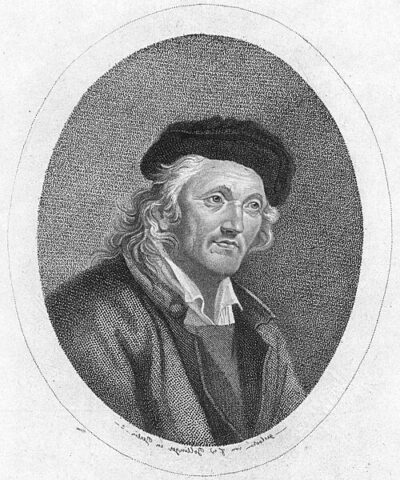
Johann Kirnberger was a German composer. Born April 24, 1721, in Saalfeld. Died July 27, 1783, in Berlin.
Facts
11 facts · 2 confirmed by two sources · 4 cited · 5 from one source
Where this comes from
Papalocal keeps its own record. It started from these sources; what each one said is kept here as it was copied, so a change on their side never changes this page by itself. Tap one to read its version.
What Wikidata says · copied November 17, 2026 · revision 2567360945
- Described as
- German composer
- Other names
- Johann Philipp Kirnberger, J. P. Kirnberger
- Born
- April 24, 1721 · 3 references
- Died
- July 27, 1783 · 4 references
- Born in
- Saalfeld · 1 reference
- Died in
- Berlin · 1 reference
- Citizen of
- Germany
- Occupation
- composer · 1 reference; musicologist · 1 reference; conductor; music theorist
- Genre
- classical music
- Instrument
- violin
- Wikipedias with a page
- 26
Wikidata item Q505543 (wikidata.org/wiki/Q505543), public domain (CC0). Copied November 17, 2026.
What Wikipedia says · copied November 17, 2026 · revision 1292218279
Johann Philipp Kirnberger (also Kernberg; 24 April 1721, Saalfeld – 27 July 1783, Berlin) was a musician, composer (primarily of fugues) and music theorist. He studied the organ with Johann Peter Kellner and Heinrich Nicolaus Gerber, and starting in 1738 he studied with the violinist Meil in Sondershausen, but most significant is the time he spent from 1739 until 1741 (with breaks) studying performance and composition with Johann Sebastian Bach.
Between 1741 and 1751 Kirnberger lived and worked in Poland for powerful magnates including Lubomirski, Poninski, and Rzewuski before ending up at the Benedictine Cloister in Lviv (then part of Poland). He spent much time collecting Polish national dances and compiled them in his treatise Die Charaktere der Tänze. Kirnberger played a significant role in the intellectual and cultural exchange between Germany and Poland in the mid-18th century.
Kirnberger became a violinist at the court of Frederick the Great in 1751. He was the music director to the Prussian Princess Anna Amalia from 1758 until his death.
Kirnberger greatly admired Johann Sebastian Bach, deeming him "the greatest of all composers". Kirnberger sought to secure the publication of all of Bach's chorale settings, which finally appeared after Kirnberger's death; see Kirnberger chorale preludes (BWV 690–713). Many of Bach's manuscripts have been preserved in Kirnberger's library (the "Kirnberger collection").
Kirnberger is known today primarily for his theoretical work Die Kunst des reinen Satzes in der Musik (The Art of Strict Composition in Music, 1774, 1779). The well-tempered tuning systems known as "Kirnberger II" and "Kirnberger III" are associated with his name (see Kirnberger temperament), as is a rational version of equal temperament (see schisma). One of his most familiar compositions is Fuga in C-dur für Orgel ("Fanfare" Fugue), which was formerly attributed to Johann Sebastian Bach and then to his son Carl Philipp Emanuel Bach.
- Born, in its opening lines
- April 24, 1721
- Died, in its opening lines
- July 27, 1783
From the Wikipedia article “Johann Kirnberger” (en.wikipedia.org/wiki/Johann_Kirnberger), by its contributors, under CC BY-SA 4.0 (creativecommons.org/licenses/by-sa/4.0/). Copied November 17, 2026; not changed.
Confirmed Two sources agree. Cited One source, and it names where it got it. One source One source, without a reference of its own. Sources disagree The sources disagree. We show the best-supported value and keep theirs below.
