
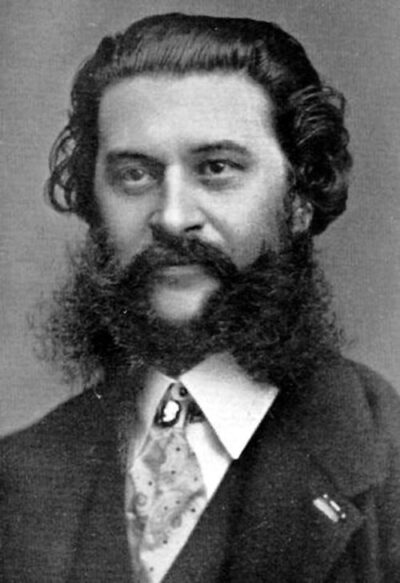
Johann Strauss II
Johann Strauss II was an Austrian composer. Born October 25, 1825, in Sankt Ulrich. Died June 3, 1899, in Vienna. Positions held include Imperial Court Ball Music Director (1863–1899). Known for The Gypsy Baron, Die Fledermaus and The Blue Danube. Awards include Knight's Cross of the Order of Franz Joseph, Knight of the Legion of Honour and 4th class, Order of the Medjidie.
Facts
48 facts · 2 confirmed by two sources · 14 cited · 31 from one source · 1 where the sources disagree
What’s different
- Name at birth: we show Johann Baptist Strauss II (Sources disagree). Wikidata also lists Johann Baptist Strauss
Where this comes from
Papalocal keeps its own record. It started from these sources; what each one said is kept here as it was copied, so a change on their side never changes this page by itself. Tap one to read its version.
What Wikidata says · copied November 16, 2026 · revision 2569091813
- Described as
- Austrian composer (1825-1899)
- Other names
- Johann Strauss, the Son, The Waltz King, Johann Strauss, Jr, Waltz King alvarado, Johann Baptist Strauss II, Johann Strauss Jr, Johann Strauss, Jr., Johann Strauss, Junior, Johann Strauss, the Younger, Walzerkönig, Johann Baptist Strauß, Johann Strauss Jr.
- Born
- October 25, 1825 · 18 references
- Died
- June 3, 1899 · 16 references
- Born in
- Sankt Ulrich · 1 reference
- Died in
- Vienna · 5 references
- Buried in
- Vienna Central Cemetery
- Cause of death
- pleuropneumonia
- Name at birth
- Johann Baptist Strauss II; Johann Baptist Strauss
- Citizen of
- Austrian Empire · 1 reference; Cisleithania · 1 reference
- Occupation
- conductor · 1 reference; composer · 2 references
- Positions held
- Imperial Court Ball Music Director (1863–1899) · 1 reference
- Genre
- instrumental music · 1 reference; operetta · 1 reference
- Instrument
- violin
- Known for
- The Gypsy Baron; Die Fledermaus; The Blue Danube
- Awards
- Knight's Cross of the Order of Franz Joseph (1871); Knight of the Legion of Honour (1877); 4th class, Order of the Medjidie; Knight of the Order of the Lion and the Sun; Knight of the Order of St. Alexander Nevsky; honorary member (1894); Knight Officer of the Order of the Saxe-Ernestine; Knight First class of the Order of the Zähringer Lion; Commander of the Order of Isabella the Catholic; Knight of the Order of Isabella the Catholic; Knight of the Order of Carlos III; Order of Civil Merit; Officer of the Order of the Crown of Italy; Knight of the Order of Saints Maurice and Lazarus; Order of the Red Eagle 4th Class
- Field
- music composing; opera; classical music; operetta; popular music; instrumental music
- Spouse
- Henrietta Treffz (1862–1878) · 1 reference; Angelika Strauss (1878–1882) · 2 references; Adele Strauss (1882–) · 1 reference
- Children
- Alice Meyszner
- Father
- Johann Strauss I · 1 reference
- Mother
- Maria Anna Streim · 1 reference
- Siblings
- Joseph Strauss · 1 reference; Eduard Strauss · 1 reference; Anna Strauss · 1 reference
- Wikipedias with a page
- 90
Wikidata item Q83309 (wikidata.org/wiki/Q83309), public domain (CC0). Copied November 16, 2026.
What Wikipedia says · copied November 16, 2026 · revision 1380041470
Johann Baptist Strauss II (; German: [ˈjoːhan bapˈtɪst ˈʃtʁaʊs]; 25 October 1825 – 3 June 1899), also known as Johann Strauss Jr., the Younger, the Son (German: Johann Strauß Sohn), or simply Johann Strauss, was an Austrian composer of light music, particularly dance music and operettas, as well as a violinist. He composed over 500 waltzes, polkas, quadrilles, marches and other types of dance music, as well as several operettas and a ballet.
In his lifetime, he was known as "The Waltz King", as he played a major role in popularizing the waltz in the 19th century. Some of Johann Strauss's most famous works include "The Blue Danube", "Kaiser-Walzer" (Emperor Waltz), "Tales from the Vienna Woods", "Frühlingsstimmen" (Voices of Spring), and the "Tritsch-Tratsch-Polka". Among his operettas, Die Fledermaus and Der Zigeunerbaron are the best known.
Strauss was the son of Johann Strauss I and his first (and only wedded) wife, Maria Anna Streim. His two younger brothers, Josef and Eduard Strauss, also became composers of light music, although they were never as well known as their brother.
- Born, in its opening lines
- October 25, 1825
- Died, in its opening lines
- June 3, 1899
From the Wikipedia article “Johann Strauss II” (en.wikipedia.org/wiki/Johann_Strauss_II), by its contributors, under CC BY-SA 4.0 (creativecommons.org/licenses/by-sa/4.0/). Copied November 16, 2026; not changed.
Confirmed Two sources agree. Cited One source, and it names where it got it. One source One source, without a reference of its own. Sources disagree The sources disagree. We show the best-supported value and keep theirs below.
