
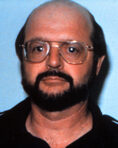
John Anthony Walker
John Anthony Walker was a Soviet spy. Born July 28, 1937, in Washington, D.C.. Died August 28, 2014, in Federal Correctional Complex, Butner.
Facts
12 facts · 2 confirmed by two sources · 2 cited · 8 from one source
Where this comes from
Papalocal keeps its own record. It started from these sources; what each one said is kept here as it was copied, so a change on their side never changes this page by itself. Tap one to read its version.
What Wikidata says · copied November 18, 2026 · revision 2567330953
- Described as
- Soviet spy (1937–2014)
- Other names
- John Anthony Walker Jr., John A. Walker, John Walker
- Born
- July 28, 1937 · 2 references
- Died
- August 28, 2014 · 1 reference
- Born in
- Washington, D.C. · 1 reference
- Died in
- Federal Correctional Complex, Butner
- Citizen of
- United States
- Occupation
- non-commissioned officer; spy · 1 reference
- Worked for
- United States Navy; First Chief Directorate
- Field
- espionage
- Military branch
- United States Navy (1955–1976)
- Military rank
- warrant officer
- Wikipedias with a page
- 15
Wikidata item Q2071545 (wikidata.org/wiki/Q2071545), public domain (CC0). Copied November 18, 2026.
What Wikipedia says · copied November 18, 2026 · revision 1384778992
John Anthony Walker Jr. (July 28, 1937 – August 28, 2014) was a United States Navy chief warrant officer and communications specialist convicted of spying for the Soviet Union from 1967 to 1985 and sentenced to life in prison.
In late 1985, Walker made a plea bargain with federal prosecutors, which required him to provide full details of his espionage activities and testify against his co-conspirator, former senior chief petty officer Jerry Whitworth. In exchange, prosecutors agreed to a lesser sentence for Walker's son, former Seaman Michael Walker, who was also involved in the spy ring. During his time as a Soviet spy, Walker helped the Soviets decipher more than one million encrypted naval messages, organizing a spy operation that The New York Times reported in 1987 "is sometimes described as the most damaging Soviet spy ring in history".
After Walker's arrest, Caspar Weinberger, President Ronald Reagan's secretary of defense, concluded that the Soviet Union made significant gains in naval warfare attributable to Walker's spying. Weinberger stated that the information Walker gave Moscow allowed the Soviets "access to weapons and sensor data and naval tactics, terrorist threats, and surface, submarine, and airborne training, readiness and tactics".
In the June 2010 issue of Naval History Magazine, John Prados, a senior fellow with the National Security Archive in Washington, D.C., pointed out that after Walker introduced himself to Soviet officials, North Korean forces seized USS Pueblo in order to make better use of Walker's spying. Prados added that North Korea subsequently shared information gleaned from the spy ship with the Soviets, enabling them to build replicas and gain access to the U.S. naval communications system, which continued until the system was completely revamped in the late 1980s. It has emerged in 2012 that North Korea acted alone and the incident actually harmed North Korea's relations with most of the Eastern Bloc.
- Born, in its opening lines
- July 28, 1937
- Died, in its opening lines
- August 28, 2014
From the Wikipedia article “John Anthony Walker” (en.wikipedia.org/wiki/John_Anthony_Walker), by its contributors, under CC BY-SA 4.0 (creativecommons.org/licenses/by-sa/4.0/). Copied November 18, 2026; not changed.
Confirmed Two sources agree. Cited One source, and it names where it got it. One source One source, without a reference of its own. Sources disagree The sources disagree. We show the best-supported value and keep theirs below.
