
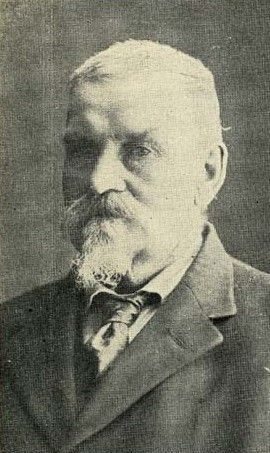
John Austin
John Austin was a legal philosopher;. Born March 3, 1790, in Creeting St Mary. Died December 1, 1859, in Weybridge.
Facts
15 facts · 2 confirmed by two sources · 6 cited · 7 from one source
Where this comes from
Papalocal keeps its own record. It started from these sources; what each one said is kept here as it was copied, so a change on their side never changes this page by itself. Tap one to read its version.
What Wikidata says · copied November 16, 2026 · revision 2568730623
- Described as
- legal philosopher; (1790-1859)
- Born
- March 3, 1790 · 7 references
- Died
- December 1, 1859 · 3 references
- Born in
- Creeting St Mary
- Died in
- Weybridge · 2 references
- Citizen of
- United Kingdom of Great Britain and Ireland
- Occupation
- jurist · 1 reference; philosopher; lawyer · 1 reference; philosopher of law
- Worked for
- University College London
- Field
- philosophy
- Spouse
- Sarah Austin · 2 references
- Children
- Lucie, Lady Duff-Gordon · 2 references
- Father
- Jonathan Austin · 2 references
- Mother
- Ann Redhouse · 1 reference
- Wikipedias with a page
- 35
Wikidata item Q60837 (wikidata.org/wiki/Q60837), public domain (CC0). Copied November 16, 2026.
What Wikipedia says · copied November 16, 2026 · revision 1381886969
John Austin (3 March 1790 – 1 December 1859) was an English legal theorist who posthumously influenced British and American law with an analytical approach to jurisprudence and a theory of legal positivism. Austin opposed traditional approaches of "natural law", arguing against any need for connections between law and morality. Human legal systems, he claimed, can and should be studied in an empirical, value-free way.
- Born, in its opening lines
- March 3, 1790
- Died, in its opening lines
- December 1, 1859
From the Wikipedia article “John Austin (legal philosopher)” (en.wikipedia.org/wiki/John_Austin_(legal_philosopher)), by its contributors, under CC BY-SA 4.0 (creativecommons.org/licenses/by-sa/4.0/). Copied November 16, 2026; not changed.
Confirmed Two sources agree. Cited One source, and it names where it got it. One source One source, without a reference of its own. Sources disagree The sources disagree. We show the best-supported value and keep theirs below.
