
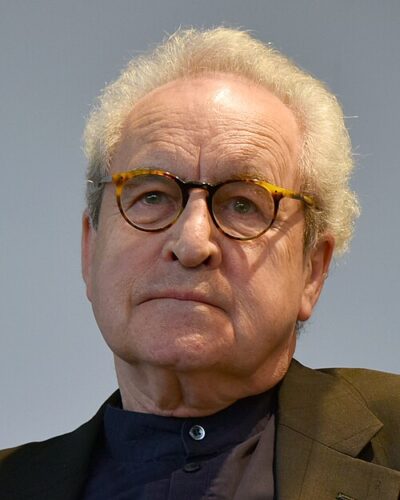
John Banville
John Banville is an Irish writer. Born December 8, 1945, in Wexford. Known for The Book of Evidence, Ghosts and Eclipse. Educated at International Writing Program and St Peter's College, Wexford. Awards include James Tait Black Memorial Prize, Franz Kafka Prize and Princess of Asturias Literary Prize.
Facts
35 facts · 1 confirmed by two sources · 6 cited · 28 from one source
Where this comes from
Papalocal keeps its own record. It started from these sources; what each one said is kept here as it was copied, so a change on their side never changes this page by itself. Tap one to read its version.
What Wikidata says · copied November 16, 2026 · revision 2564435301
- Described as
- Irish writer (born 1945)
- Other names
- William John Banville
- Born
- December 8, 1945 · 8 references
- Born in
- Wexford
- Citizen of
- Ireland
- Occupation
- screenwriter; novelist; writer · 2 references; playwright; literary critic; journalist; author · 1 reference
- Education
- International Writing Program; St Peter's College, Wexford
- Member of
- Aosdána; American Academy of Arts and Sciences; Royal Society of Literature
- Known for
- The Book of Evidence; Ghosts; Eclipse; Shroud; The Sea; The Infinities; Ancient Light
- Awards
- James Tait Black Memorial Prize (1976); Franz Kafka Prize (2011); Princess of Asturias Literary Prize (2014) · 1 reference; Irish PEN Award; Booker Prize (2005) · 1 reference; International Nonino Prize (2003); Fellow of the Royal Society of Literature (2007) · 1 reference; Fellow of the American Academy of Arts and Sciences; Austrian State Prize for European Literature (2013) · 1 reference; AWB Vincent Literary Award; Flaiano Literary Prize
- Siblings
- Vincent Banville
- Website
- http://www.john-banville.com
- Wikipedias with a page
- 49
Wikidata item Q313077 (wikidata.org/wiki/Q313077), public domain (CC0). Copied November 16, 2026.
What Wikipedia says · copied November 16, 2026 · revision 1384133138
William John Banville (born 8 December 1945) is an Irish novelist, adapter of dramas, and screenwriter. A former member of Aosdána, he voluntarily relinquished the financial stipend in 2001 to another, more impoverished, writer.
Banville has been publishing books since 1970, when a short story collection appeared, with his first novels emerging soon after. His "Revolutions Trilogy", published between 1976 and 1982, comprises works named after renowned scientists: Doctor Copernicus, Kepler and The Newton Letter. His next work, Mefisto, had a mathematical theme, and, in combination with the three books from the "Revolutions Trilogy," is the fourth book from the "Scientific Tetralogy." Banville's 1989 novel The Book of Evidence began the "Frames Trilogy," dealing with the work of art; it was completed by Ghosts and Athena during the 1990s. This early fiction was the subject of numerous academic studies in the late 20th-century, including Rüdiger Imhof's John Banville: A Critical Introduction (1989), Joseph McMinn's John Banville: A Critical Study (1991) and The Supreme Fictions of John Banville (1999).
Doctor Copernicus won him the 1976 James Tait Black Memorial Prize, and he also won the 2003 International Nonino Prize. His thirteenth novel — The Sea — won the Booker Prize in 2005, and with it came wider international recognition for Banville among the reading public. Subsequently, he was elected a Fellow of the Royal Society of Literature in 2007, and recognised with a selection of European accolades, among which were the 2011 Franz Kafka Prize from Czechia, the 2013 Austrian State Prize for European Literature and the 2014 Prince of Asturias Award for Literature from Spain. Italy made Banville a Cavaliere (knight) of the Ordine della Stella d'Italia in 2017. Born and raised in the town of Wexford in the southeast of Ireland, and living in Howth, Dublin, he has been mentioned as a contender for the Nobel Prize in Literature.
Banville had a 30-year career working in the Irish newspaper industry, and served as literary editor of The Irish Times between 1988 and 1999. As Benjamin Black, he took to publishing crime novels in later life, mostly based in 1950s Dublin and featuring an Irish pathologist character named Quirke. An alternative history novel, The Secret Guests, was published under the name B. W. Black in 2020.
- Born, in its opening lines
- December 8, 1945
From the Wikipedia article “John Banville” (en.wikipedia.org/wiki/John_Banville), by its contributors, under CC BY-SA 4.0 (creativecommons.org/licenses/by-sa/4.0/). Copied November 16, 2026; not changed.
Confirmed Two sources agree. Cited One source, and it names where it got it. One source One source, without a reference of its own. Sources disagree The sources disagree. We show the best-supported value and keep theirs below.
