
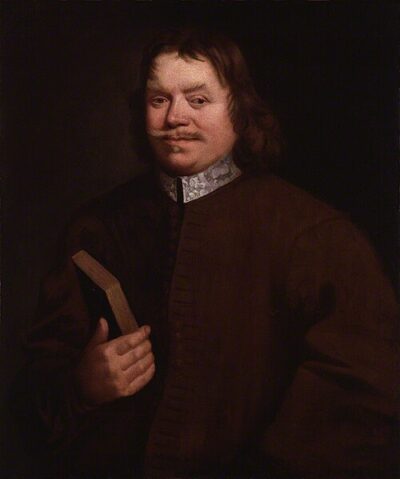
John Bunyan
John Bunyan was an English writer and preacher. Born November 28, 1628, in Elstow. Died August 31, 1688, in London. Known for The Pilgrim’s Progress. Educated at Bedford School.
Facts
22 facts · 2 confirmed by two sources · 10 cited · 10 from one source
Where this comes from
Papalocal keeps its own record. It started from these sources; what each one said is kept here as it was copied, so a change on their side never changes this page by itself. Tap one to read its version.
What Wikidata says · copied November 16, 2026 · revision 2566683494
- Described as
- English writer and preacher (1628–1688)
- Other names
- Joannes Bunyan
- Born
- November 28, 1628 · 1 reference
- Died
- August 31, 1688 · 11 references
- Born in
- Elstow · 3 references
- Died in
- London · 1 reference
- Buried in
- Bunhill Fields
- Citizen of
- Kingdom of England
- Occupation
- theologian · 1 reference; writer · 7 references; preacher · 3 references; novelist; tinker
- Education
- Bedford School
- Genre
- allegory
- Known for
- The Pilgrim’s Progress
- Field
- Baptist church · 1 reference; Protestant theology · 1 reference; Anglicanism · 1 reference; religious literature · 2 references; Puritanism · 1 reference
- Spouse
- first wife of John Bunyan; Elizabeth Bunyan
- Religion
- Baptists · 1 reference
- Wikipedias with a page
- 83
Wikidata item Q108206 (wikidata.org/wiki/Q108206), public domain (CC0). Copied November 16, 2026.
What Wikipedia says · copied November 16, 2026 · revision 1376684590
John Bunyan (; 1628 – 31 August 1688) was an English writer and nonconformist preacher. He is best remembered as the author of the Christian allegory The Pilgrim's Progress, which also became an influential literary model. In addition to The Pilgrim's Progress, Bunyan wrote nearly sixty titles, many of them expanded sermons.
Bunyan came from the village of Elstow, near Bedford. He had some schooling and, at the age of sixteen, joined the Parliamentary Army at Newport Pagnell during the first stage of the English Civil War. After three years in the army, he returned to Elstow and took up the trade of tinker, which he had learned from his father. He became interested in religion after his marriage, attending first the parish church and then joining the Bedford Meeting, a nonconformist group in St John's church in Bedford, and later became a preacher. After the restoration of the monarchy in 1660, when the freedom of nonconformists was curtailed, Bunyan was arrested and spent the next twelve years in prison because he refused to give up preaching. During this time, he wrote a spiritual autobiography, Grace Abounding to the Chief of Sinners, and began work on his most famous book, The Pilgrim's Progress.
Bunyan's later years, following release from a further six-month imprisonment, were spent in relative comfort and he continued to be a popular author and preacher, and was the pastor of the Bedford Meeting. He died aged 59 after falling ill on a journey to London and is buried in Bunhill Fields. The Pilgrim's Progress became one of the most published books in the English language; 1,300 editions having been printed by 1938, 250 years after the author's death.
Bunyan is remembered in the Church of England with a Lesser Festival on 30 August. Some other churches of the Anglican Communion, such as the Anglican Church of Australia, honour him on the day of his death (31 August).
- Born, in its opening lines
- 1628
- Died, in its opening lines
- August 31, 1688
From the Wikipedia article “John Bunyan” (en.wikipedia.org/wiki/John_Bunyan), by its contributors, under CC BY-SA 4.0 (creativecommons.org/licenses/by-sa/4.0/). Copied November 16, 2026; not changed.
Confirmed Two sources agree. Cited One source, and it names where it got it. One source One source, without a reference of its own. Sources disagree The sources disagree. We show the best-supported value and keep theirs below.
