
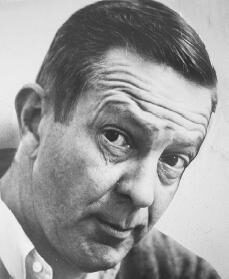
John Cheever
John Cheever was an American novelist and short story writer. Born May 27, 1912, in Quincy. Died June 18, 1982, in Ossining. Educated at Thayer Academy and Quincy High School. Awards include Guggenheim Fellowship, National Book Award for Fiction (2 times) and O. Henry Award.
Facts
30 facts · 2 confirmed by two sources · 10 cited · 18 from one source
Where this comes from
Papalocal keeps its own record. It started from these sources; what each one said is kept here as it was copied, so a change on their side never changes this page by itself. Tap one to read its version.
What Wikidata says · copied November 13, 2026 · revision 2567372858
- Described as
- American novelist and short story writer (1912-1982)
- Other names
- John William Cheever
- Born
- May 27, 1912 · 12 references
- Died
- June 18, 1982 · 12 references
- Born in
- Quincy · 1 reference
- Died in
- Ossining · 1 reference
- Buried in
- First Parish Cemetery · 1 reference
- Cause of death
- kidney cancer
- Name at birth
- John William Cheever
- Citizen of
- United States
- Occupation
- writer · 2 references; novelist; diarist; screenwriter
- Worked for
- University of Utah; Boston University; University of Iowa · 1 reference
- Education
- Thayer Academy · 1 reference; Quincy High School · 1 reference
- Member of
- American Academy of Arts and Letters; American Academy of Arts and Sciences
- Awards
- Guggenheim Fellowship (1951) · 1 reference; National Book Award for Fiction (2 times) (1958, 1981) · 1 reference; O. Henry Award (1956); William Dean Howells Medal of the American Academy of Arts and Letters (1965); National Book Critics Circle Award for Fiction (1978) · 1 reference; Pulitzer Prize for Fiction (1979) · 1 reference
- Field
- literature · 1 reference; prose · 1 reference; American fiction · 1 reference
- Children
- Benjamin Cheever; Susan Cheever
- Wikipedias with a page
- 47
Wikidata item Q336151 (wikidata.org/wiki/Q336151), public domain (CC0). Copied November 13, 2026.
What Wikipedia says · copied November 13, 2026 · revision 1383841975
John William Cheever (May 27, 1912 – June 18, 1982) was an American short story writer and novelist. He is sometimes called "the Chekhov of the suburbs". His fiction is mostly set on the Upper East Side of Manhattan; the Westchester suburbs; old New England villages based on various South Shore towns around Quincy, Massachusetts, where he was born; and Italy, especially Rome. His short stories included "The Enormous Radio", "Goodbye, My Brother", "The Five-Forty-Eight", "The Country Husband", and "The Swimmer", and he also wrote five novels: The Wapshot Chronicle (National Book Award, 1958),
The Wapshot Scandal (William Dean Howells Medal, 1965), Bullet Park (1969), Falconer (1977) and a novella, Oh What a Paradise It Seems (1982).
His main themes include the duality of human nature: sometimes dramatized as the disparity between a character's decorous social persona and inner corruption, and sometimes as a conflict between two characters (often brothers) who embody the salient aspects of both—light and dark, flesh and spirit. Many of his works also express a nostalgia for a vanishing way of life (as evoked by the mythical St. Botolphs in the Wapshot novels), characterized by abiding cultural traditions and a profound sense of community, as opposed to the alienating nomadism of modern suburbia.
A compilation of his short stories, The Stories of John Cheever, won the 1979 Pulitzer Prize for Fiction and a National Book Critics Circle Award, and its first paperback edition won a 1981 National Book Award.
On April 27, 1982, six weeks before his death, Cheever was awarded the National Medal for Literature by the American Academy of Arts and Letters. His work has been included in the Library of America.
- Born, in its opening lines
- May 27, 1912
- Died, in its opening lines
- June 18, 1982
From the Wikipedia article “John Cheever” (en.wikipedia.org/wiki/John_Cheever), by its contributors, under CC BY-SA 4.0 (creativecommons.org/licenses/by-sa/4.0/). Copied November 13, 2026; not changed.
Confirmed Two sources agree. Cited One source, and it names where it got it. One source One source, without a reference of its own. Sources disagree The sources disagree. We show the best-supported value and keep theirs below.
