
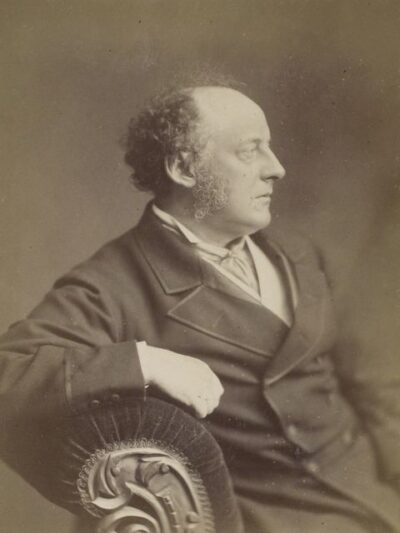
John Everett Millais
John Everett Millais was a British painter and illustrator. Born June 8, 1829, in Southampton. Died August 13, 1896, in London. Positions held include President of the Royal Academy of Arts (1896). Known for Ophelia, Christ in the House of His Parents and Isabella. Educated at Royal Academy of Arts and Heatherley School of Fine Art. Awards include Pour le Mérite for Sciences and Arts order, Officer of the Legion of Honour and Honorary doctor of the University of Oxford.
Facts
55 facts · 2 confirmed by two sources · 23 cited · 29 from one source · 1 where the sources disagree
What’s different
- Died in: we show London (Sources disagree). Wikidata also lists Palace Gate
Where this comes from
Papalocal keeps its own record. It started from these sources; what each one said is kept here as it was copied, so a change on their side never changes this page by itself. Tap one to read its version.
What Wikidata says · copied November 16, 2026 · revision 2568662427
- Described as
- British painter and illustrator (1829–1896)
- Other names
- Sir John Everett Millais, Bt, Millais, John E. Millais, J.E. Millais, Sir John Everett Millais P R A, J. E. Millais, John Everett Millais (Sir), sir john e. millais, J. Millais, Sir John Everett Millais, j.e. millais, Sir John Everett Millais, 1st Baronet
- Born
- June 8, 1829 · 16 references
- Died
- August 13, 1896 · 16 references
- Born in
- Southampton · 2 references
- Died in
- Palace Gate · 1 reference; London · 2 references
- Buried in
- St Paul's Cathedral
- Cause of death
- laryngeal cancer
- Citizen of
- United Kingdom of Great Britain and Ireland; United Kingdom · 1 reference
- Occupation
- painter · 2 references; illustrator; photographer · 1 reference; artist · 2 references; draftsperson · 1 reference; Pre-Raphaelite Brotherhood · 1 reference
- Positions held
- President of the Royal Academy of Arts (1896)
- Education
- Royal Academy of Arts; Heatherley School of Fine Art
- Member of
- Royal Academy of Arts; Académie des beaux-arts; Royal Society of Portrait Painters; Academy of Arts, Berlin
- Genre
- history painting · 2 references; portrait painting; portrait · 1 reference; allegory · 1 reference; animal art · 1 reference; figure · 1 reference
- Known for
- Ophelia; Christ in the House of His Parents; Isabella; Autumn Leaves; Mariana; The Order of Release; The Vale of Rest; The Black Brunswicker
- Awards
- Pour le Mérite for Sciences and Arts order; Officer of the Legion of Honour; Honorary doctor of the University of Oxford; baronet
- Field
- painting; illustration; printmaking
- Spouse
- Effie Gray (1855–1896) · 2 references
- Children
- John Guille Millais · 2 references; Sir Everett Millais, 2nd Baronet · 1 reference; George Gray Millais · 1 reference; Effie Gray Millais · 3 references; Mary Hunt Millais · 1 reference; Alice Sophia Caroline Millais · 2 references; Sir Geoffrey William Millais, 4th Bt. · 1 reference; Sophia Margaret Jameson Millais · 1 reference
- Father
- John William Millais · 1 reference
- Mother
- Mary Emily Evamy · 1 reference
- Siblings
- Emily Millais
- Military branch
- British Army
- Wikipedias with a page
- 56
Wikidata item Q159606 (wikidata.org/wiki/Q159606), public domain (CC0). Copied November 16, 2026.
What Wikipedia says · copied November 16, 2026 · revision 1385717934
Sir John Everett Millais, 1st Baronet ( MIL-ay; 8 June 1829 – 13 August 1896) was an English painter and illustrator who was one of the founders of the Pre-Raphaelite Brotherhood. He was a child prodigy who, aged eleven, became the youngest student to enter the Royal Academy Schools. The Pre-Raphaelite Brotherhood was founded at his family home in London, at 83 Gower Street (now number 7). Millais became the most famous exponent of the style, his painting Christ in the House of His Parents (1849–50) generating considerable controversy, and he produced a picture that could serve as the embodiment of the historical and naturalist focus of the group, Ophelia, in 1851–1852.
By the mid-1850s, Millais was moving away from the Pre-Raphaelite style to develop a new form of realism in his art. His later works were enormously successful, making Millais one of the wealthiest artists of his day, but some former admirers including William Morris saw this as a sell-out (Millais notoriously allowed one of his paintings to be used for a sentimental soap advertisement). While these and early 20th-century critics, reading art through the lens of Modernism, viewed much of his later production as wanting, this perspective has changed in recent decades, as his later works have come to be seen in the context of wider changes and advanced tendencies in the broader late nineteenth-century art world, and can now be seen as predictive of the art world of the present.
Millais's personal life has also played a significant role in his reputation. His wife Effie was formerly married to the critic John Ruskin, who had supported Millais's early work. The annulment of the Ruskin marriage and Effie's subsequent marriage to Millais have sometimes been linked to his change of style. She also became a powerful promoter of his work and they worked in concert to secure commissions and expand their social and intellectual circles.
- Born, in its opening lines
- June 8, 1829
- Died, in its opening lines
- August 13, 1896
From the Wikipedia article “John Everett Millais” (en.wikipedia.org/wiki/John_Everett_Millais), by its contributors, under CC BY-SA 4.0 (creativecommons.org/licenses/by-sa/4.0/). Copied November 16, 2026; not changed.
Confirmed Two sources agree. Cited One source, and it names where it got it. One source One source, without a reference of its own. Sources disagree The sources disagree. We show the best-supported value and keep theirs below.
