
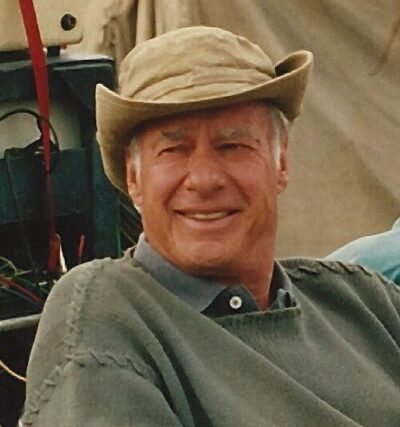
John Frankenheimer
John Frankenheimer was an American film and television director. Born February 19, 1930, in Queens. Died July 6, 2002, in Los Angeles. Educated at Williams College. Awards include Primetime Emmy Award for Outstanding Directing for a Limited Series, Movie, or Dramatic Special (4 times).
Facts
14 facts · 2 confirmed by two sources · 4 cited · 7 from one source · 1 where the sources disagree
What’s different
- Cause of death: we show myocardial infarction (Sources disagree). Wikidata also lists stroke
Where this comes from
Papalocal keeps its own record. It started from these sources; what each one said is kept here as it was copied, so a change on their side never changes this page by itself. Tap one to read its version.
What Wikidata says · copied November 13, 2026 · revision 2563139562
- Described as
- American film and television director (1930-2002)
- Other names
- John Michael Frankenheimer
- Born
- February 19, 1930 · 9 references
- Died
- July 6, 2002 · 8 references
- Born in
- Queens
- Died in
- Los Angeles · 1 reference
- Cause of death
- myocardial infarction; stroke
- Citizen of
- United States
- Occupation
- film director · 1 reference; film producer · 1 reference; screenwriter; television producer · 1 reference; director · 1 reference
- Education
- Williams College
- Awards
- Primetime Emmy Award for Outstanding Directing for a Limited Series, Movie, or Dramatic Special (4 times) (1994, 1995, 1996, 1998)
- Spouse
- Evans Evans (1963–2002)
- Wikipedias with a page
- 42
Wikidata item Q262820 (wikidata.org/wiki/Q262820), public domain (CC0). Copied November 13, 2026.
What Wikipedia says · copied November 13, 2026 · revision 1375618123
John Michael Frankenheimer (February 19, 1930 – July 6, 2002) was an American film and television director, known both for his social dramas and his action/suspense pictures. Among his best-known theatrical film credits are Birdman of Alcatraz, The Manchurian Candidate (both 1962), Seven Days in May, The Train (both 1964), Seconds, Grand Prix (both 1966), The Fixer (1968), The Iceman Cometh (1973), French Connection II (1975), Black Sunday (1977), 52 Pick-Up (1986), and Ronin (1998).
His nearly 40 feature films and over 50 plays for television were notable for their influence on contemporary thought. He became a pioneer of the "modern-day political thriller", having begun his career at the height of the Cold War. He won four Emmy Awards – three consecutive – in the 1990s for directing the television movies Against the Wall, The Burning Season, Andersonville, and George Wallace, the last of which also received a Golden Globe Award for Best Miniseries or Television Film. He was inducted into the Television Hall of Fame in 2002.
Frankenheimer was technically highly accomplished from his days in live television; many of his films were noted for creating "psychological dilemmas" for his male protagonists along with having a strong "sense of environment", similar in style to films by director Sidney Lumet, for whom he had earlier worked as assistant director. He developed a "tremendous propensity for exploring political situations" which would ensnare his characters. Critic Leonard Maltin writes that "in his time [1960s] ... Frankenheimer worked with the top writers, producers and actors in a series of films that dealt with issues that were just on top of the moment – things that were facing us all."
- Born, in its opening lines
- February 19, 1930
- Died, in its opening lines
- July 6, 2002
From the Wikipedia article “John Frankenheimer” (en.wikipedia.org/wiki/John_Frankenheimer), by its contributors, under CC BY-SA 4.0 (creativecommons.org/licenses/by-sa/4.0/). Copied November 13, 2026; not changed.
Confirmed Two sources agree. Cited One source, and it names where it got it. One source One source, without a reference of its own. Sources disagree The sources disagree. We show the best-supported value and keep theirs below.
