
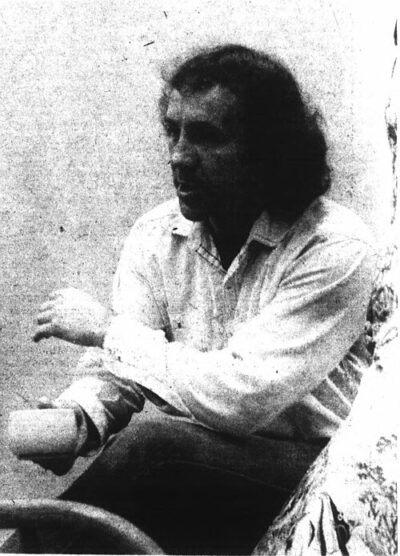
John Grinder
John Grinder is an American linguist, developer of neuro-linguistic programming. Born January 10, 1940, in Detroit. Educated at University of California, Santa Cruz and University of San Francisco.
Facts
14 facts · 1 confirmed by two sources · 3 cited · 10 from one source
Where this comes from
Papalocal keeps its own record. It started from these sources; what each one said is kept here as it was copied, so a change on their side never changes this page by itself. Tap one to read its version.
What Wikidata says · copied November 16, 2026 · revision 2567685026
- Described as
- American linguist, developer of neuro-linguistic programming
- Born
- January 10, 1940 · 2 references
- Born in
- Detroit
- Citizen of
- United States
- Occupation
- linguist · 1 reference; psychologist · 1 reference; writer · 1 reference; philosopher; university teacher
- Worked for
- University of California, Santa Cruz
- Education
- University of California, Santa Cruz (–1971) · 1 reference; University of San Francisco
- Member of
- 2nd Meta group at University of California, Santa Cruz
- Field
- psychology
- Website
- https://www.johngrinder.com
- Wikipedias with a page
- 23
Wikidata item Q201446 (wikidata.org/wiki/Q201446), public domain (CC0). Copied November 16, 2026.
What Wikipedia says · copied November 16, 2026 · revision 1372739012
John Thomas Grinder Jr. ( GRIN-dər; born January 10, 1940) is an American linguist, writer, management consultant, trainer and speaker. Grinder is credited with co-creating the pseudoscience known as neuro-linguistic programming (NLP) with Richard Bandler. He is co-director of Quantum Leap Inc., a management consulting firm founded by his partner Carmen Bostic St. Clair in 1987 (Grinder joined in 1989). Grinder and Bostic St. Clair also run workshops and seminars on NLP internationally.
- Born, in its opening lines
- January 10, 1940
From the Wikipedia article “John Grinder” (en.wikipedia.org/wiki/John_Grinder), by its contributors, under CC BY-SA 4.0 (creativecommons.org/licenses/by-sa/4.0/). Copied November 16, 2026; not changed.
Confirmed Two sources agree. Cited One source, and it names where it got it. One source One source, without a reference of its own. Sources disagree The sources disagree. We show the best-supported value and keep theirs below.
