
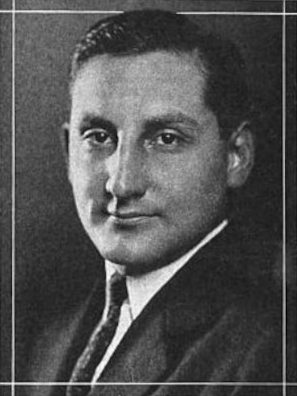
John Howard Lawson
John Howard Lawson was an American dramatist. Born September 25, 1894, in New York City. Died August 11, 1977, in San Francisco. Educated at Williams College.
Facts
12 facts · 2 confirmed by two sources · 5 cited · 5 from one source
What’s different
- Died: we show August 11, 1977 (Confirmed). Wikidata also lists August 14, 1977
Where this comes from
Papalocal keeps its own record. It started from these sources; what each one said is kept here as it was copied, so a change on their side never changes this page by itself. Tap one to read its version.
What Wikidata says · copied November 18, 2026 · revision 2529444299
- Described as
- American dramatist (1894–1977)
- Other names
- Edward Lewis
- Born
- September 25, 1894 · 7 references
- Died
- August 11, 1977 · 5 references; August 14, 1977 · 2 references
- Born in
- New York City · 2 references
- Died in
- San Francisco · 1 reference
- Citizen of
- United States
- Occupation
- screenwriter · 1 reference; playwright · 1 reference; writer · 1 reference
- Worked for
- Stanford University; Loyola Marymount University · 1 reference
- Education
- Williams College
- Member of
- Hollywood Ten
- Wikipedias with a page
- 15
Wikidata item Q974932 (wikidata.org/wiki/Q974932), public domain (CC0). Copied November 18, 2026.
What Wikipedia says · copied November 18, 2026 · revision 1386038760
John Howard Lawson (September 25, 1894 – August 11, 1977) was an American playwright, screenwriter, arts critic, and cultural historian. After enjoying a relatively successful career writing plays that were staged on and off Broadway in the 1920s and '30s, Lawson relocated to Hollywood and began working in the motion picture industry. In 1933, he helped to organize the Screen Writers Guild and became its first president. In the ensuing years, he was credited with a number of notable screenplays including Blockade (1938), Action in the North Atlantic (1943), and Counter-Attack (1945).
In 1947, Lawson was one of the Hollywood Ten, the initial group of American film industry professionals to appear before Congress as part of an investigation into communist influence in Hollywood. Because he and the other nine screenwriters and directors refused to answer questions about their alleged Communist Party affiliation, they were cited for contempt of Congress. In 1948, Lawson was sentenced to a year in prison; he began serving in 1950. When he got out, he like the others found himself blacklisted by the studios. He wrote, uncredited, the screenplay for Cry, the Beloved Country (1951), an adaptation of Alan Paton's anti-apartheid novel about South Africa. With his Hollywood livelihood largely cut off, Lawson turned his attention to scholarship. He taught at several California universities. He authored books about drama, Filmmaking, and cultural history. Unlike other members of the Hollywood Ten, Lawson was never "un-blacklisted". He remained a pariah in the film industry until his death in 1977.
- Born, in its opening lines
- September 25, 1894
- Died, in its opening lines
- August 11, 1977
From the Wikipedia article “John Howard Lawson” (en.wikipedia.org/wiki/John_Howard_Lawson), by its contributors, under CC BY-SA 4.0 (creativecommons.org/licenses/by-sa/4.0/). Copied November 18, 2026; not changed.
Confirmed Two sources agree. Cited One source, and it names where it got it. One source One source, without a reference of its own. Sources disagree The sources disagree. We show the best-supported value and keep theirs below.
