
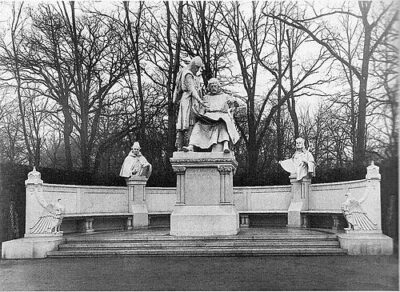
John I, Margrave of Brandenburg was a Margrave of Brandenburg. Born 1213. Died April 4, 1266, in Stendal.
Facts
22 facts · 0 confirmed by two sources · 9 cited · 13 from one source
Where this comes from
Papalocal keeps its own record. It started from these sources; what each one said is kept here as it was copied, so a change on their side never changes this page by itself. Tap one to read its version.
What Wikidata says · copied November 18, 2026 · revision 2569459768
- Described as
- Margrave of Brandenburg
- Other names
- john i of brandenburg
- Born
- 1213 · 1 reference
- Died
- April 4, 1266
- Died in
- Stendal
- Occupation
- ruler
- Spouse
- Sophia of Denmark (1236–) · 1 reference; Brigitte Jutta of Saxony (1255–); Jadwiga Barnimówna (1250–) · 1 reference
- Children
- John II, Margrave of Brandenburg-Stendal · 1 reference; Otto IV, Margrave of Brandenburg-Stendal · 1 reference; Eric of Brandenburg · 1 reference; Conrad, Margrave of Brandenburg-Stendal · 1 reference; Agnes of Brandenburg; Henry I, Margrave of Brandenburg-Stendal · 1 reference; Albrecht von Brandenburg · 1 reference; Mechtild von Brandenburg · 1 reference; Helene von Brandenburg · 1 reference; Hermann von Brandenburg
- Father
- Albert II, Margrave of Brandenburg
- Mother
- Matilda Von Groitzsch
- Siblings
- Otto III, Margrave of Brandenburg; Elisabeth of Brandenburg, Landgravine of Thuringia; Matilda of Brandenburg, Duchess of Brunswick-Lüneburg
- Wikipedias with a page
- 21
Wikidata item Q641895 (wikidata.org/wiki/Q641895), public domain (CC0). Copied November 18, 2026.
What Wikipedia says · copied November 18, 2026 · revision 1379857827
John I, Margrave of Brandenburg ( c. 1213 – 4 April 1266) was from 1220 until his death Margrave of Brandenburg, jointly with his brother Otto III "the Pious".
The reign of these two Ascanian Margraves was characterized by an expansion of the Margraviate, which annexed the remaining parts of Teltow and Barnim, the Uckermark, the Lordship of Stargard, the Lubusz Land and parts of the Neumark east of the Oder. They consolidated the position of Brandenburg within the Holy Roman Empire, which was reflected in the fact that in 1256, Otto III was a candidate to be elected King of the Germans. They founded several cities and developed the twin cities of Cölln and Berlin. They expanded the Ascanian castle in nearby Spandau and made it their preferred residence.
Before their death, they divided the Margraviate into a Johannine and Ottonian parts. The Ascanians were traditionally buried in the Lehnin Abbey in the Ottonian part of the country. In 1258, they founded a Cistercian monastery named Mariensee, where members of the Johannine line could be buried. In 1266, they changed their mind and founded a second monastery Chorin, 8 km southwest of Mariensee. John was initially buried at Mariensee; his body was moved to Chorin in 1273.
After the Ottonian line died out in 1317, John I's grandson Waldemar reunited the Margraviate.
From the Wikipedia article “John I of Brandenburg” (en.wikipedia.org/wiki/John_I_of_Brandenburg), by its contributors, under CC BY-SA 4.0 (creativecommons.org/licenses/by-sa/4.0/). Copied November 18, 2026; not changed.
Confirmed Two sources agree. Cited One source, and it names where it got it. One source One source, without a reference of its own. Sources disagree The sources disagree. We show the best-supported value and keep theirs below.
