
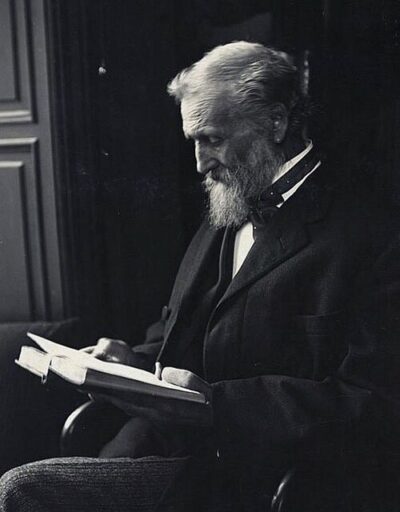
John Muir
John Muir was a Scottish-American naturalist. Born April 21, 1838, in Dunbar. Died December 24, 1914, in Los Angeles. Known for A Thousand-Mile Walk to the Gulf, My First Summer in the Sierra and Our National Parks. Educated at University of Wisconsin–Madison and University of Wisconsin System. Awards include California Hall of Fame.
Facts
41 facts · 2 confirmed by two sources · 12 cited · 27 from one source
Where this comes from
Papalocal keeps its own record. It started from these sources; what each one said is kept here as it was copied, so a change on their side never changes this page by itself. Tap one to read its version.
What Wikidata says · copied November 13, 2026 · revision 2568796709
- Described as
- Scottish-American naturalist (1838–1914)
- Other names
- J. Muir
- Born
- April 21, 1838 · 8 references
- Died
- December 24, 1914 · 8 references
- Born in
- Dunbar · 1 reference
- Died in
- Los Angeles · 1 reference
- Buried in
- Muir-Strentzel Hanna Cemetery · 1 reference
- Cause of death
- pneumonia
- Citizen of
- United States (1903–); United Kingdom of Great Britain and Ireland; United Kingdom
- Occupation
- botanist · 1 reference; geologist · 1 reference; explorer; inventor · 1 reference; essayist; writer · 1 reference; autobiographer; preservationist · 1 reference
- Worked for
- James Mason Hutchings
- Education
- University of Wisconsin–Madison; University of Wisconsin System · 1 reference
- Member of
- American Association for the Advancement of Science · 1 reference; Sierra Club; American Academy of Arts and Letters; Mount Whitney Club · 1 reference
- Sport
- mountaineering
- Known for
- A Thousand-Mile Walk to the Gulf; My First Summer in the Sierra; Our National Parks
- Awards
- California Hall of Fame (2006)
- Field
- conservation; environmental protection; geology · 1 reference; ecology · 1 reference
- Spouse
- Louisa Wanda Strentzel (1880–1905) · 1 reference
- Children
- Wanda Muir Hanna; Helen Lillian Muir Funk
- Mother
- Ann Gilrye · 1 reference
- Religion
- Christianity
- Lived in
- Yosemite Valley; Martinez; Portage
- Wikipedias with a page
- 61
Wikidata item Q379580 (wikidata.org/wiki/Q379580), public domain (CC0). Copied November 13, 2026.
What Wikipedia says · copied November 13, 2026 · revision 1384177676
John Muir ( MURE; April 21, 1838 – December 24, 1914), also known as "John of the Mountains" and "Father of the National Parks", was a Scottish-born American naturalist, author, environmental philosopher, botanist, zoologist, glaciologist, and early advocate for the preservation of wilderness in the United States.
His books, letters and essays describing his adventures in nature, especially in the Sierra Nevada, have been read by millions. His activism helped to preserve the Yosemite Valley and Sequoia National Park, and his example has served as an inspiration for the preservation of many other wilderness areas. The Sierra Club, which he co-founded, is a prominent American conservation organization. In his later life, Muir devoted most of his time to his wife and the preservation of the Western forests. As part of the campaign to make Yosemite a national park, Muir published two landmark articles on wilderness preservation in The Century Magazine, "The Treasures of the Yosemite" and "Features of the Proposed Yosemite National Park"; this helped support the push for the US Congress to pass a bill in 1890 establishing Yosemite National Park. The spiritual quality and enthusiasm toward nature expressed in his writings has inspired readers, including presidents and congressmen, to take action to help preserve large nature areas.
John Muir has been considered "an inspiration to both Scots and Americans". Muir's biographer, Steven J. Holmes, believes that Muir has become "one of the patron saints of twentieth-century American environmental activity", both political and recreational. As a result, his writings are commonly discussed in books and journals, and he has often been quoted by nature photographers such as Ansel Adams. "Muir has profoundly shaped the very categories through which Americans understand and envision their relationships with the natural world", writes Holmes.
Muir was noted for being an ecological thinker, political spokesman, and environmental advocate, whose writings became a personal guide into nature for many people, making his name "almost ubiquitous" in the modern environmental consciousness. A fierce advocate for wildlife, Muir believed in complete preservationism—the idea that plants, animals, and natural resources found in the environment should be completely off-limits to humans. Indeed, his philosophy became a tenet of the National Park Service, which bans hunting at most major parks, ensuring that endangered or protected species remain in the ecosystems that they sustain and reside in. According to author William Anderson, Muir exemplified "the archetype of our oneness with the earth", while biographer Donald Worster says he believed his mission was "saving the American soul from total surrender to materialism". On April 21, 2013, the first John Muir Day was celebrated in Scotland, which marked the 175th anniversary of his birth, paying homage to the conservationist.
- Born, in its opening lines
- April 21, 1838
- Died, in its opening lines
- December 24, 1914
From the Wikipedia article “John Muir” (en.wikipedia.org/wiki/John_Muir), by its contributors, under CC BY-SA 4.0 (creativecommons.org/licenses/by-sa/4.0/). Copied November 13, 2026; not changed.
Confirmed Two sources agree. Cited One source, and it names where it got it. One source One source, without a reference of its own. Sources disagree The sources disagree. We show the best-supported value and keep theirs below.
