
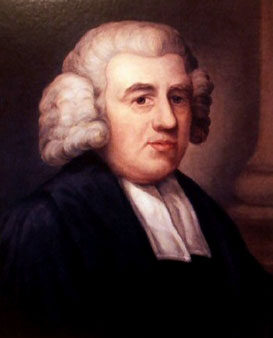
John Newton
John Newton was an Anglican clergyman, slave trader and abolitionist. Born July 24, 1725, in London. Died December 21, 1807, in London. Awards include Gospel Music Hall of Fame.
Facts
17 facts · 1 confirmed by two sources · 9 cited · 6 from one source · 1 where the sources disagree
What’s different
- Born: we show July 24, 1725 (Sources disagree). Wikipedia says August 4, 1725
Where this comes from
Papalocal keeps its own record. It started from these sources; what each one said is kept here as it was copied, so a change on their side never changes this page by itself. Tap one to read its version.
What Wikidata says · copied November 16, 2026 · revision 2567368345
- Described as
- Anglican clergyman, slave trader and abolitionist (1725–1807)
- Born
- July 24, 1725 · 7 references
- Died
- December 21, 1807 · 7 references
- Born in
- London · 1 reference
- Died in
- London · 1 reference
- Buried in
- Tomb of John and Mary Newton · 1 reference
- Citizen of
- United Kingdom of Great Britain and Ireland
- Occupation
- cleric; hymnwriter; sailor; slave trader · 2 references; abolitionist · 1 reference; writer · 1 reference; priest · 1 reference; merchant · 1 reference
- Awards
- Gospel Music Hall of Fame (1982)
- Field
- Protestantism · 1 reference
- Religion
- Anglicanism
- Wikipedias with a page
- 45
Wikidata item Q357301 (wikidata.org/wiki/Q357301), public domain (CC0). Copied November 16, 2026.
What Wikipedia says · copied November 16, 2026 · revision 1382374459
John Newton (; 4 August [O.S. 24 July] 1725 – 21 December 1807) was an English evangelical Anglican cleric and slavery abolitionist. He had previously been a captain of slave ships and an investor in the slave trade. Newton served as a sailor in the Royal Navy (after forced recruitment) and was a servant for a time in West Africa. Newton is noted for being author of the hymns "Amazing Grace" and "Glorious Things of Thee Are Spoken".
Newton went to sea at a young age and worked on slave ships in the Atlantic slave trade for several years. After retiring from active sea-faring, he continued to invest in the slave trade. Some years after experiencing a conversion to Christianity during his rescue, Newton renounced his trade and became a prominent supporter of abolitionism. Now an evangelical, Newton was ordained as a Church of England cleric and served as parish priest at Olney, Buckinghamshire, for two decades and wrote hymns.
Newton lived to see the British Empire's abolition of the African slave trade in 1807, just a few months before his death.
- Born, in its opening lines
- August 4, 1725
- Died, in its opening lines
- December 21, 1807
From the Wikipedia article “John Newton” (en.wikipedia.org/wiki/John_Newton), by its contributors, under CC BY-SA 4.0 (creativecommons.org/licenses/by-sa/4.0/). Copied November 16, 2026; not changed.
Confirmed Two sources agree. Cited One source, and it names where it got it. One source One source, without a reference of its own. Sources disagree The sources disagree. We show the best-supported value and keep theirs below.
