
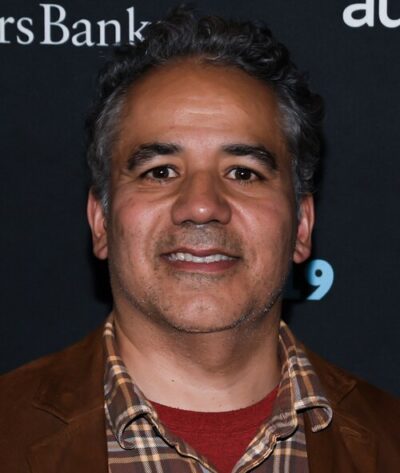
John Ortiz
John Ortiz is an American actor. Born May 23, 1968, in Brooklyn. Educated at State University of New York at Albany and John Dewey High School.
Facts
10 facts · 0 confirmed by two sources · 2 cited · 8 from one source
Where this comes from
Papalocal keeps its own record. It started from these sources; what each one said is kept here as it was copied, so a change on their side never changes this page by itself. Tap one to read its version.
What Wikidata says · copied November 15, 2026 · revision 2553956520
- Described as
- American actor
- Born
- May 23, 1968 · 2 references
- Born in
- Brooklyn
- Citizen of
- United States
- Occupation
- stage actor; television actor; film actor · 1 reference
- Education
- State University of New York at Albany; John Dewey High School · 1 reference
- Spouse
- Jennifer Ortiz
- Lived in
- California
- Wikipedias with a page
- 26
Wikidata item Q210094 (wikidata.org/wiki/Q210094), public domain (CC0). Copied November 15, 2026.
What Wikipedia says · copied November 15, 2026 · revision 1381320353
John Augustin Ortiz is an American actor. He is known for his antagonist role as Arturo Braga in Fast & Furious (2009) and Fast & Furious 6 (2013), and Clyde in Jack Goes Boating (2010), which earned him a nomination for the Independent Spirit Award for Best Supporting Actor. He is also an artistic director/co-founder of the LAByrinth Theater Company.
Ortiz's other film performances include Guajiro in Carlito's Way (1993), Sheriff Eddie Morales in Aliens vs. Predator: Requiem (2007), Javier J. Rivera in American Gangster (2007), officer Reuben "Sandy" Santiago in Pride and Glory (2008), Ronnie in Silver Linings Playbook (2012), Victor Nieves in Kong: Skull Island (2017), Dr. Powell in Bumblebee (2018) and Arthur in American Fiction (2023).
From the Wikipedia article “John Ortiz” (en.wikipedia.org/wiki/John_Ortiz), by its contributors, under CC BY-SA 4.0 (creativecommons.org/licenses/by-sa/4.0/). Copied November 15, 2026; not changed.
Confirmed Two sources agree. Cited One source, and it names where it got it. One source One source, without a reference of its own. Sources disagree The sources disagree. We show the best-supported value and keep theirs below.
