
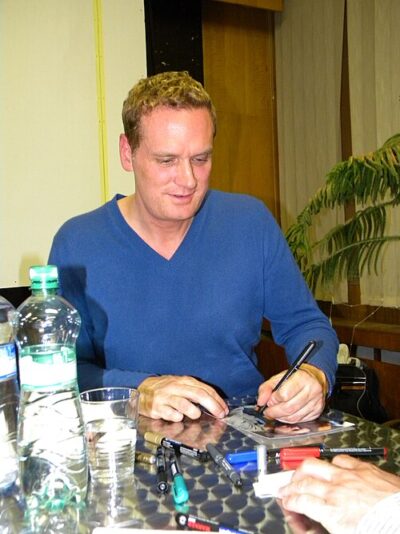
John Ottman
John Ottman is an American composer, film editor, and film director. Born July 6, 1964, in San Diego. Educated at University of Southern California and USC School of Cinematic Arts.
Facts
16 facts · 1 confirmed by two sources · 5 cited · 10 from one source
Where this comes from
Papalocal keeps its own record. It started from these sources; what each one said is kept here as it was copied, so a change on their side never changes this page by itself. Tap one to read its version.
What Wikidata says · copied November 15, 2026 · revision 2563867430
- Described as
- American composer, film editor, and film director
- Born
- July 6, 1964 · 3 references
- Born in
- San Diego · 1 reference
- Name at birth
- John Verl Ottman · 1 reference
- Citizen of
- United States
- Occupation
- film director; film editor; composer · 1 reference; film score composer; director · 1 reference; musician · 1 reference
- Education
- University of Southern California; USC School of Cinematic Arts; Gunderson High School · 1 reference; De Anza College
- Field
- film score
- Website
- http://www.johnottman.com/
- Wikipedias with a page
- 24
Wikidata item Q956822 (wikidata.org/wiki/Q956822), public domain (CC0). Copied November 15, 2026.
What Wikipedia says · copied November 15, 2026 · revision 1381649953
John Ottman (born July 6, 1964) is an American film composer, editor, and director. He is best known for collaborating with director Bryan Singer, scoring and/or editing many of his films, including Public Access (1993), The Usual Suspects (1995), Superman Returns (2006), Valkyrie (2008) and Jack the Giant Slayer (2013), as well as the X-Men film series. For his work on Singer's 2018 Queen biopic Bohemian Rhapsody, Ottman won the Academy Award for Best Film Editing.
- Born, in its opening lines
- July 6, 1964
From the Wikipedia article “John Ottman” (en.wikipedia.org/wiki/John_Ottman), by its contributors, under CC BY-SA 4.0 (creativecommons.org/licenses/by-sa/4.0/). Copied November 15, 2026; not changed.
Confirmed Two sources agree. Cited One source, and it names where it got it. One source One source, without a reference of its own. Sources disagree The sources disagree. We show the best-supported value and keep theirs below.
