
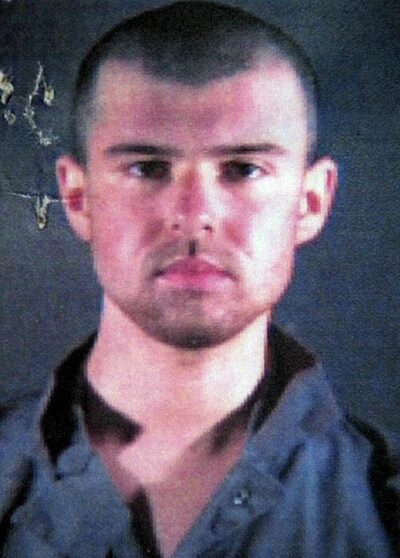
John Walker Lindh is an American Taliban member. Born February 9, 1981, in Washington, D.C.. Educated at Redwood High School.
Facts
9 facts · 1 confirmed by two sources · 1 cited · 7 from one source
Where this comes from
Papalocal keeps its own record. It started from these sources; what each one said is kept here as it was copied, so a change on their side never changes this page by itself. Tap one to read its version.
What Wikidata says · copied November 18, 2026 · revision 2551503541
- Described as
- American Taliban member
- Other names
- John Phillip Walker Lindh, Sulayman al-Faris, Abu Sulayman al-Irlandi, John Philip Walker Lindh
- Born
- February 9, 1981 · 2 references
- Born in
- Washington, D.C.
- Name at birth
- John Philip Walker Lindh
- Citizen of
- United States; Ireland
- Occupation
- combatant
- Education
- Redwood High School
- Religion
- Sunni Islam (1997–) · 1 reference; Catholicism (–1997)
- Wikipedias with a page
- 17
Wikidata item Q1382249 (wikidata.org/wiki/Q1382249), public domain (CC0). Copied November 18, 2026.
What Wikipedia says · copied November 18, 2026 · revision 1385405917
John Philip Walker Lindh (born February 9, 1981) is an American former Taliban member who was captured by United States forces as an enemy combatant during the United States' invasion of Afghanistan in November 2001. He was detained at Qala-i-Jangi fortress, which was used as a prison. He denied participating in the Battle of Qala-i-Jangi, a violent uprising of the Taliban prisoners, stating that he was wounded in the leg and hid in the cellar of the Pink House, in the southern half of the fort. He was one of the 86 prisoners who survived the uprising, from an estimated 400 prisoners in total. CIA officer Johnny Micheal Spann was killed during that uprising. Brought to trial in United States federal court in February 2002, Lindh accepted a plea bargain; he pleaded guilty to two charges and was sentenced to 20 years in prison. He was released on parole on May 23, 2019, for a three-year period of supervised release.
A convert to Sunni Islam in California at age 16, Lindh traveled to Yemen in 1998 to study Arabic and stayed there for 10 months. He later returned in 2000, then went to Afghanistan to aid the Taliban in fighting against the Afghan Northern Alliance. He received training at Al-Farouq, a training camp associated with al-Qaeda, designated a terrorist organization by the United States and other countries. While at the camp, he attended a lecture by Osama bin Laden. After the September 11 attacks, he remained with the Taliban military forces despite learning that the U.S. had become allied with the Northern Alliance. Lindh had previously received training with Harkat-ul-Mujahideen, an internationally designated terrorist organization based in Pakistan.
Lindh went by the name Sulayman al-Faris during his time in Afghanistan but later preferred the name Abu Sulayman al-Irlandi. In early reports following his capture, when the press learned that he was a U.S. citizen, he was usually referred to by the news media as just "John Walker".
- Born, in its opening lines
- February 9, 1981
From the Wikipedia article “John Walker Lindh” (en.wikipedia.org/wiki/John_Walker_Lindh), by its contributors, under CC BY-SA 4.0 (creativecommons.org/licenses/by-sa/4.0/). Copied November 18, 2026; not changed.
Confirmed Two sources agree. Cited One source, and it names where it got it. One source One source, without a reference of its own. Sources disagree The sources disagree. We show the best-supported value and keep theirs below.
