
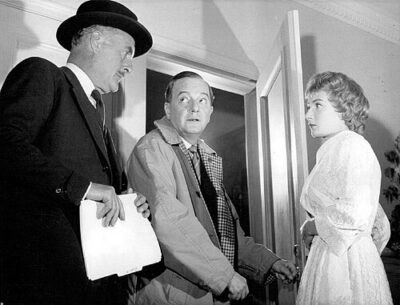
John Williams was an English actor. Born April 15, 1903, in Chalfont St Giles. Died May 5, 1983, in La Jolla. Educated at Lancing College. Awards include Tony Award for Best Featured Actor in a Play and Donaldson Awards.
Facts
15 facts · 2 confirmed by two sources · 3 cited · 10 from one source
Where this comes from
Papalocal keeps its own record. It started from these sources; what each one said is kept here as it was copied, so a change on their side never changes this page by itself. Tap one to read its version.
What Wikidata says · copied November 18, 2026 · revision 2570370348
- Described as
- English actor (1903–1983)
- Born
- April 15, 1903 · 4 references
- Died
- May 5, 1983 · 4 references
- Born in
- Chalfont St Giles · 1 reference
- Died in
- La Jolla · 1 reference
- Cause of death
- disease
- Citizen of
- United Kingdom; United Kingdom of Great Britain and Ireland (–1927)
- Occupation
- screenwriter; stage actor; composer; actor · 2 references; television actor
- Education
- Lancing College
- Awards
- Tony Award for Best Featured Actor in a Play (1953); Donaldson Awards
- Wikipedias with a page
- 20
Wikidata item Q921945 (wikidata.org/wiki/Q921945), public domain (CC0). Copied November 18, 2026.
What Wikipedia says · copied November 18, 2026 · revision 1381030539
Hugh Ernest Leo Williams (15 April 1903 – 5 May 1983), known professionally as John Williams, was an English stage, film and television actor. He is remembered for his role as Chief Inspector Hubbard in Alfred Hitchcock's Dial M for Murder, as the chauffeur in Billy Wilder's Sabrina (both 1954), as Mr. Brogan-Moore in Witness for the Prosecution (1957) and as the second "Mr. French" on TV's Family Affair in its first season (1967).
- Born, in its opening lines
- April 15, 1903
- Died, in its opening lines
- May 5, 1983
From the Wikipedia article “John Williams (actor)” (en.wikipedia.org/wiki/John_Williams_(actor)), by its contributors, under CC BY-SA 4.0 (creativecommons.org/licenses/by-sa/4.0/). Copied November 18, 2026; not changed.
Confirmed Two sources agree. Cited One source, and it names where it got it. One source One source, without a reference of its own. Sources disagree The sources disagree. We show the best-supported value and keep theirs below.
