
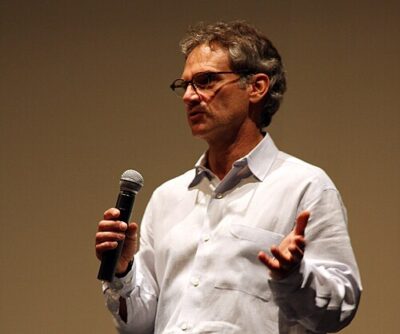
Jon Krakauer
Jon Krakauer is an American writer and journalist. Born April 12, 1954, in Brookline. Educated at Corvallis High School and Hampshire College. Awards include Walter Sullivan Award for Excellence in Science Journalism.
Facts
13 facts · 1 confirmed by two sources · 4 cited · 8 from one source
Where this comes from
Papalocal keeps its own record. It started from these sources; what each one said is kept here as it was copied, so a change on their side never changes this page by itself. Tap one to read its version.
What Wikidata says · copied November 15, 2026 · revision 2567280218
- Described as
- American writer and journalist
- Born
- April 12, 1954 · 3 references
- Born in
- Brookline · 1 reference
- Citizen of
- United States
- Occupation
- journalist · 1 reference; explorer; writer · 1 reference; mountaineer · 1 reference
- Education
- Corvallis High School · 1 reference; Hampshire College
- Sport
- mountaineering
- Awards
- Walter Sullivan Award for Excellence in Science Journalism (1997) · 1 reference
- Website
- http://www.jonkrakauer.com; https://jonkrakauer.com/
- Wikipedias with a page
- 36
Wikidata item Q368337 (wikidata.org/wiki/Q368337), public domain (CC0). Copied November 15, 2026.
What Wikipedia says · copied November 15, 2026 · revision 1372442984
Jon Krakauer (born April 12, 1954) is an American writer and mountaineer. He is the author of bestselling nonfiction books—Into the Wild; Into Thin Air; Under the Banner of Heaven; and Where Men Win Glory: The Odyssey of Pat Tillman—as well as numerous magazine articles. He was a member of an ill-fated expedition to summit Mount Everest in 1996, one of the deadliest disasters in the history of climbing Everest, which would become the subject of Into Thin Air.
- Born, in its opening lines
- April 12, 1954
From the Wikipedia article “Jon Krakauer” (en.wikipedia.org/wiki/Jon_Krakauer), by its contributors, under CC BY-SA 4.0 (creativecommons.org/licenses/by-sa/4.0/). Copied November 15, 2026; not changed.
Confirmed Two sources agree. Cited One source, and it names where it got it. One source One source, without a reference of its own. Sources disagree The sources disagree. We show the best-supported value and keep theirs below.
