
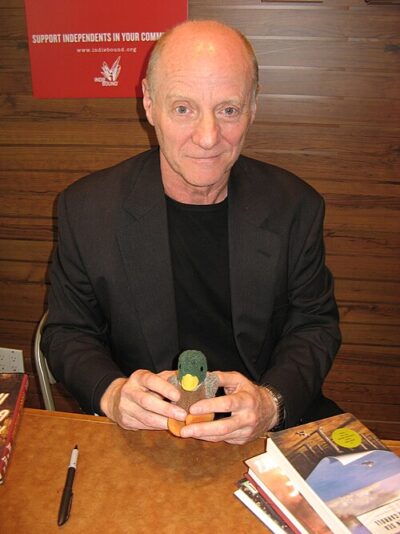
Jonathan Carroll is an American fiction writer. Born January 26, 1949, in New York City. Educated at Rutgers University and University of Virginia. Awards include Grand Prix de l'Imaginaire for Best Foreign-Language Short Story, August Derleth Award and Prix Tour-Apollo Award.
Facts
16 facts · 1 confirmed by two sources · 7 cited · 8 from one source
Where this comes from
Papalocal keeps its own record. It started from these sources; what each one said is kept here as it was copied, so a change on their side never changes this page by itself. Tap one to read its version.
What Wikidata says · copied November 18, 2026 · revision 2571575859
- Described as
- American fiction writer
- Other names
- Jonathan Samuel Carroll
- Born
- January 26, 1949 · 4 references
- Born in
- New York City · 3 references
- Citizen of
- United States · 2 references
- Occupation
- writer · 1 reference; novelist
- Education
- Rutgers University; University of Virginia
- Awards
- Grand Prix de l'Imaginaire for Best Foreign-Language Short Story (2000) · 1 reference; August Derleth Award (1992); Prix Tour-Apollo Award (1989); World Fantasy Award for Best Short Fiction (1988) · 1 reference; Bram Stoker Award for Best Fiction Collection (1995) · 1 reference
- Children
- Ryder Carroll · 1 reference
- Father
- Sidney Carroll
- Mother
- June Carroll
- Website
- http://www.jonathancarroll.com/
- Wikipedias with a page
- 19
Wikidata item Q727079 (wikidata.org/wiki/Q727079), public domain (CC0). Copied November 18, 2026.
What Wikipedia says · copied November 18, 2026 · revision 1378052445
Jonathan Samuel Carroll (born January 26, 1949) is an American fiction writer primarily known for novels that may be labelled magic realism, slipstream or contemporary fantasy. He has lived in Austria since 1974.
- Born, in its opening lines
- January 26, 1949
From the Wikipedia article “Jonathan Carroll” (en.wikipedia.org/wiki/Jonathan_Carroll), by its contributors, under CC BY-SA 4.0 (creativecommons.org/licenses/by-sa/4.0/). Copied November 18, 2026; not changed.
Confirmed Two sources agree. Cited One source, and it names where it got it. One source One source, without a reference of its own. Sources disagree The sources disagree. We show the best-supported value and keep theirs below.
