
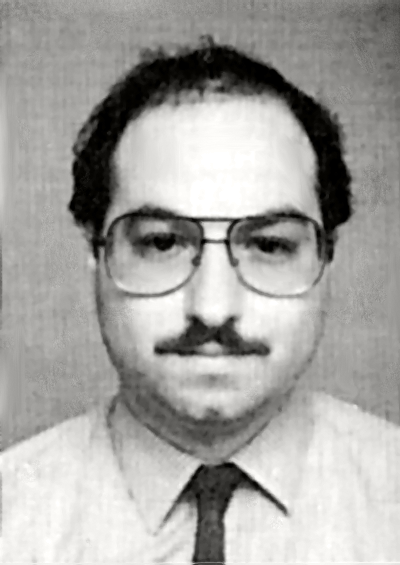
Jonathan Pollard
Jonathan Pollard is an U.S. civilian intelligence analyst turned Israeli spy. Born August 7, 1954, in Galveston. Educated at Stanford University.
Facts
13 facts · 1 confirmed by two sources · 4 cited · 8 from one source
Where this comes from
Papalocal keeps its own record. It started from these sources; what each one said is kept here as it was copied, so a change on their side never changes this page by itself. Tap one to read its version.
What Wikidata says · copied November 15, 2026 · revision 2530112755
- Described as
- U.S. civilian intelligence analyst turned Israeli spy
- Other names
- Jonathan Jay Pollard
- Born
- August 7, 1954 · 2 references
- Born in
- Galveston
- Citizen of
- United States; Israel · 1 reference
- Occupation
- spy; political scientist · 1 reference; double agent · 1 reference; secret service officer · 1 reference
- Worked for
- Mossad; United States Navy
- Education
- Stanford University
- Field
- espionage · 1 reference; intelligence agency · 1 reference
- Wikipedias with a page
- 27
Wikidata item Q264700 (wikidata.org/wiki/Q264700), public domain (CC0). Copied November 15, 2026.
What Wikipedia says · copied November 15, 2026 · revision 1385159892
Jonathan Jay Pollard (Hebrew: יונתן פולארד, romanized: Yonatan Polard, born August 7, 1954) is an American-born Israeli spy and former American intelligence analyst who was jailed for spying for Israel.
In 1984, Pollard sold numerous state secrets, including the National Security Agency's ten-volume manual on how the US gathers its signal intelligence and disclosed the names of thousands of people who had cooperated with US intelligence agencies. He was apprehended in 1985 and in subsequent proceedings agreed to a plea deal, pleaded guilty to spying for and providing top-secret classified information to Israel. Pollard admitted shopping his services—successfully, in some cases—to other countries. In 1987, he was sentenced to life in prison for violations of the Espionage Act.
The Israeli government acknowledged part of its role in Pollard's espionage in 1987 and issued a formal apology to the US, but did not admit to paying him until 1998. Over the course of his imprisonment, Israeli officials, US-Israeli activist groups and some American politicians continually lobbied for a reduction or commutation of his sentence. In defense of his actions, Pollard said the American intelligence establishment collectively endangered Israel's security by withholding crucial information.
Opposing any form of clemency for Pollard were many active and retired US officials, including Donald Rumsfeld, Dick Cheney, former CIA director George Tenet; several former US secretaries of defense; a bi-partisan group of US congressional leaders; and members of the US Intelligence Community. They maintained that the damage to US national security due to Pollard's espionage was much more severe, wide-ranging, and enduring than acknowledged publicly.
Although Pollard argued that he only supplied Israel with information critical to its security, opponents stated that he had no way of knowing what the Israelis had received through legitimate exchanges and that much of the data he compromised had nothing to do with Israeli security. Pollard revealed aspects of the US intelligence gathering process, including its "sources and methods". In 1995, while imprisoned, he was granted Israeli citizenship.
Pollard was released from prison on November 20, 2015. On November 20, 2020, his parole expired and all restrictions were eliminated. On December 30, 2020, Pollard and his second wife relocated to Israel and settled in Jerusalem.
Since relocating to Israel, Pollard has endorsed Israeli far-right minister Itamar Ben-Gvir and advocated a population transfer to relocate Gaza's Palestinians to Ireland.
- Born, in its opening lines
- August 7, 1954
From the Wikipedia article “Jonathan Pollard” (en.wikipedia.org/wiki/Jonathan_Pollard), by its contributors, under CC BY-SA 4.0 (creativecommons.org/licenses/by-sa/4.0/). Copied November 15, 2026; not changed.
Confirmed Two sources agree. Cited One source, and it names where it got it. One source One source, without a reference of its own. Sources disagree The sources disagree. We show the best-supported value and keep theirs below.
