
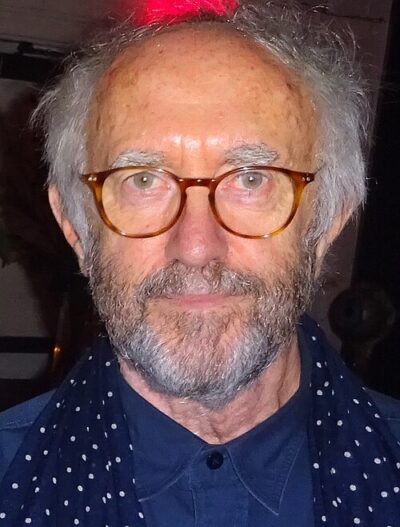
Jonathan Pryce
Jonathan Pryce is a Welsh actor. Born June 1, 1947, in Carmel. Educated at Royal Academy of Dramatic Art and Edge Hill University. Awards include Laurence Olivier Awards, Commander of the Order of the British Empire and Theatre World Award.
Facts
22 facts · 1 confirmed by two sources · 5 cited · 16 from one source
Where this comes from
Papalocal keeps its own record. It started from these sources; what each one said is kept here as it was copied, so a change on their side never changes this page by itself. Tap one to read its version.
What Wikidata says · copied November 16, 2026 · revision 2562730745
- Described as
- Welsh actor (born 1947)
- Other names
- Sir Jonathan Pryce
- Born
- June 1, 1947 · 3 references
- Born in
- Carmel
- Name at birth
- John Price
- Citizen of
- United Kingdom
- Occupation
- television actor; film actor; stage actor; improviser; actor · 1 reference; singer · 1 reference; musician · 1 reference
- Education
- Royal Academy of Dramatic Art (–1971) · 1 reference; Edge Hill University
- Awards
- Laurence Olivier Awards; Commander of the Order of the British Empire; Theatre World Award (1977) · 1 reference; Tony Award for Best Featured Actor in a Play (1977); Tony Award for Best Actor in a Musical (1991); Drama Desk Award for Outstanding Actor in a Musical; Cannes Film Festival Award for Best Actor (1995)
- Spouse
- Kate Fahy (2015)
- Lived in
- London
- Wikipedias with a page
- 48
Wikidata item Q312702 (wikidata.org/wiki/Q312702), public domain (CC0). Copied November 16, 2026.
What Wikipedia says · copied November 16, 2026 · revision 1384658411
Sir Jonathan Pryce (born John Price; 1 June 1947) is a Welsh actor. He is known for his performances on stage and in film and television. He has received numerous awards, including two Tony Awards and two Laurence Olivier Awards as well as nominations for an Academy Award, a Saturn Award, a Genie Award, three BAFTA Awards, three Golden Globe Awards, three Actor Awards, and six Emmy Awards. He was honoured with a knighthood for services to drama in 2021.
After studying at the Royal Academy of Dramatic Art, he began his career as a stage actor in the early 1970s. His work in theatre includes an Olivier Award–winning performance in the title role of the Royal Court Theatre's Hamlet in 1980 and as The Engineer in the stage musical Miss Saigon in 1990. On the Broadway stage he earned two Tony Awards—the first for Best Featured Actor in a Play for his Broadway debut role in Comedians (1977), the second for Best Actor in a Musical for the Broadway transfer of the musical Miss Saigon (1991).
His breakthrough screen performance was in Terry Gilliam's satirical dystopian black comedy film Brazil (1985). Critically lauded for his versatility, Pryce has appeared in big-budget films including Evita (1996), Tomorrow Never Dies (1997) and Pirates of the Caribbean series (2003–2007), as well as independent films such as Glengarry Glen Ross (1992), The Age of Innocence (1993), Carrington (1995), The New World (2005) and The Wife (2017). He earned his first Academy Award nomination for his portrayal of Pope Francis in The Two Popes (2019).
For his work on television, he received four Primetime Emmy Award nominations for his portrayals of Henry Kravis in the HBO film Barbarians at the Gate (1993), a wealthy widower in the BBC series Return to Cranford (2010), Prince Philip in the Netflix series The Crown, and as a retired senior MI5 officer in the Apple TV+ series Slow Horses. Pryce also played Thomas Wolsey in the BBC limited series Wolf Hall (2015), the High Sparrow in the HBO series Game of Thrones (2015–2016) and Sir Stuart Strange in the series Taboo (2017).
- Born, in its opening lines
- June 1, 1947
From the Wikipedia article “Jonathan Pryce” (en.wikipedia.org/wiki/Jonathan_Pryce), by its contributors, under CC BY-SA 4.0 (creativecommons.org/licenses/by-sa/4.0/). Copied November 16, 2026; not changed.
Confirmed Two sources agree. Cited One source, and it names where it got it. One source One source, without a reference of its own. Sources disagree The sources disagree. We show the best-supported value and keep theirs below.
