
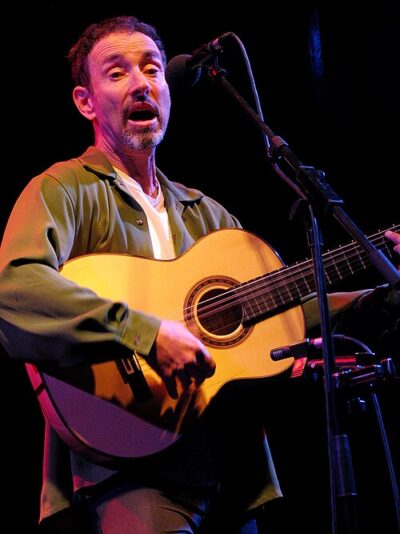
Jonathan Richman
Jonathan Richman is an American musician. Born May 16, 1951, in Natick. Known for There's Something About Mary, Roadrunner and Pablo Picasso. Educated at Natick High School.
Facts
21 facts · 1 confirmed by two sources · 2 cited · 18 from one source
Where this comes from
Papalocal keeps its own record. It started from these sources; what each one said is kept here as it was copied, so a change on their side never changes this page by itself. Tap one to read its version.
What Wikidata says · copied November 16, 2026 · revision 2563865014
- Described as
- American musician
- Other names
- Jonathan Michael Richman
- Born
- May 16, 1951 · 1 reference
- Born in
- Natick
- Citizen of
- United States
- Occupation
- guitarist; singer; singer-songwriter; recording artist; musician · 2 references; composer · 1 reference
- Education
- Natick High School · 1 reference
- Member of
- The Modern Lovers; Jonathan Richman & The Modern Lovers
- Genre
- folk music; proto-punk
- Instrument
- guitar; voice
- Record label
- Beserkley Records; Vapor Records
- Known for
- There's Something About Mary; Roadrunner; Pablo Picasso
- Wikipedias with a page
- 22
Wikidata item Q709470 (wikidata.org/wiki/Q709470), public domain (CC0). Copied November 16, 2026.
What Wikipedia says · copied November 16, 2026 · revision 1385284745
Jonathan Michael Richman (born May 16, 1951) is an American singer, songwriter and guitarist. In 1970, he founded the Modern Lovers, an influential proto-punk band. Since the mid-1970s, Richman has worked either solo or with low-key acoustic and electric backing. He is known for his wide-eyed, unaffected, and childlike outlook, and music that, while rooted in rock and roll, is influenced by music from around the world.
- Born, in its opening lines
- May 16, 1951
From the Wikipedia article “Jonathan Richman” (en.wikipedia.org/wiki/Jonathan_Richman), by its contributors, under CC BY-SA 4.0 (creativecommons.org/licenses/by-sa/4.0/). Copied November 16, 2026; not changed.
Confirmed Two sources agree. Cited One source, and it names where it got it. One source One source, without a reference of its own. Sources disagree The sources disagree. We show the best-supported value and keep theirs below.
