
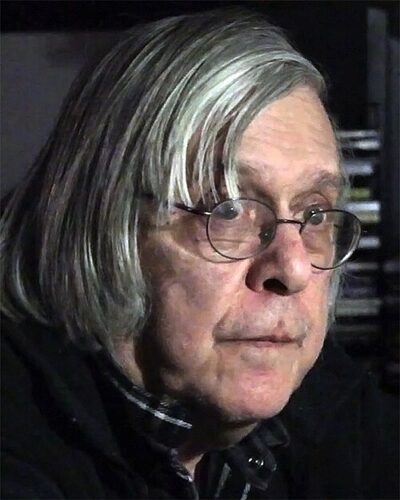
Jonathan Rosenbaum
Jonathan Rosenbaum is an American film critic. Born February 27, 1943, in Florence. Educated at Bard College and The Putney School. Awards include Guggenheim Fellowship.
Facts
10 facts · 1 confirmed by two sources · 3 cited · 6 from one source
Where this comes from
Papalocal keeps its own record. It started from these sources; what each one said is kept here as it was copied, so a change on their side never changes this page by itself. Tap one to read its version.
What Wikidata says · copied November 16, 2026 · revision 2567297177
- Described as
- American film critic
- Born
- February 27, 1943 · 2 references
- Born in
- Florence
- Citizen of
- United States
- Occupation
- film critic · 1 reference; journalist · 1 reference; author · 1 reference
- Education
- Bard College; The Putney School · 1 reference
- Awards
- Guggenheim Fellowship · 1 reference
- Website
- http://www.jonathanrosenbaum.net · 1 reference
- Wikipedias with a page
- 20
Wikidata item Q1343526 (wikidata.org/wiki/Q1343526), public domain (CC0). Copied November 16, 2026.
What Wikipedia says · copied November 16, 2026 · revision 1372586746
Jonathan Rosenbaum (born February 27, 1943) is an American film critic and author. Rosenbaum was the head film critic for The Chicago Reader from 1987 to 2008. He has published and edited numerous books about cinema and has contributed to such notable film publications as Cahiers du cinéma and Film Comment.
Regarding Rosenbaum, French New Wave director Jean-Luc Godard said, "I think there is a very good film critic in the United States today, a successor of James Agee, and that is Jonathan Rosenbaum. He's one of the best; we don't have writers like him in France today. He's like André Bazin."
- Born, in its opening lines
- February 27, 1943
From the Wikipedia article “Jonathan Rosenbaum” (en.wikipedia.org/wiki/Jonathan_Rosenbaum), by its contributors, under CC BY-SA 4.0 (creativecommons.org/licenses/by-sa/4.0/). Copied November 16, 2026; not changed.
Confirmed Two sources agree. Cited One source, and it names where it got it. One source One source, without a reference of its own. Sources disagree The sources disagree. We show the best-supported value and keep theirs below.
