
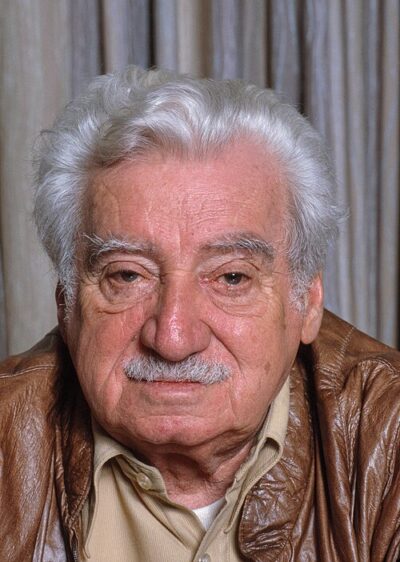
Jorge Amado
Jorge Amado was a Brazilian writer. Born August 10, 1912, in Itabuna. Died August 6, 2001, in Salvador. Positions held include federal deputy of São Paulo (1946–1948). Known for Gabriela, Clove and Cinnamon, Dona Flor and Her Two Husbands and Tieta. Educated at Federal University of Rio de Janeiro Faculty of Law. Awards include Camões Prize, Prix mondial Cino Del Duca and Lenin Peace Prize.
Facts
40 facts · 2 confirmed by two sources · 25 cited · 13 from one source
Where this comes from
Papalocal keeps its own record. It started from these sources; what each one said is kept here as it was copied, so a change on their side never changes this page by itself. Tap one to read its version.
What Wikidata says · copied November 16, 2026 · revision 2558018543
- Described as
- Brazilian writer (1912–2001)
- Other names
- Jorge Leal Amado de Faria
- Born
- August 10, 1912 · 16 references
- Died
- August 6, 2001 · 15 references
- Born in
- Itabuna · 2 references
- Died in
- Salvador · 1 reference
- Cause of death
- cardiac arrest · 1 reference
- Citizen of
- Brazil · 2 references
- Occupation
- writer · 3 references; journalist · 1 reference; poet; novelist · 1 reference; politician · 1 reference
- Positions held
- federal deputy of São Paulo (1946–1948) · 1 reference
- Education
- Federal University of Rio de Janeiro Faculty of Law
- Member of
- Brazilian Academy of Letters (1961–); Academy of Arts, Berlin
- Known for
- Gabriela, Clove and Cinnamon · 1 reference; Dona Flor and Her Two Husbands · 1 reference; Tieta · 1 reference; Captains of the Sands · 1 reference; Tereza Batista: Home from the Wars
- Awards
- Camões Prize (1994) · 2 references; Prix mondial Cino Del Duca (1990) · 1 reference; Lenin Peace Prize; International Stalin Prize for Peace · 1 reference; honorary doctor of the University of Brasília · 1 reference; honorary doctor of the University of Padua · 1 reference; Meritorious Citizen of the Freedom and Social Justice João Mangabeira (CBJM) · 1 reference; Commandeur des Arts et des Lettres · 1 reference; Juca Pato Prize (1969) · 1 reference; Grand Officer of the Military Order of Saint James of the Sword (1980) · 1 reference; International Nonino Prize (1984) · 1 reference; Grand Officer of the Order of Prince Henry (1986) · 1 reference; honorary doctorate from University of Lyon-II (1987) · 1 reference; Commander of the Order of Cultural Merit (Brazil) (1995) · 2 references; honorary doctor of the Sorbonne Nouvelle University (1998) · 3 references
- Spouse
- Zélia Gattai (1945–2001)
- Children
- Paloma Amado
- Siblings
- James Amado · 1 reference
- Religion
- atheism
- Website
- http://www.jorgeamado.com.br/
- Wikipedias with a page
- 80
Wikidata item Q184440 (wikidata.org/wiki/Q184440), public domain (CC0). Copied November 16, 2026.
What Wikipedia says · copied November 16, 2026 · revision 1371894503
Jorge Leal Amado de Faria ( ZHOR-zhee; Brazilian Portuguese: [ˈʒɔʁʒi aˈmadu]; 10 August 1912 – 6 August 2001), known as Jorge Amado, was a Brazilian writer of the modernist school. He remains the best-known of modern Brazilian writers, with his work having been translated into some 49 languages and popularized in film, including Dona Flor and Her Two Husbands in 1976, and having been nominated for the Nobel Prize in Literature at least seven times. His work reflects the image of a Mestiço Brazil and is marked by religious syncretism. He depicted a cheerful and optimistic country that was beset, at the same time, with deep social and economic differences.
He occupied the 23rd chair of the Brazilian Academy of Letters from 1961 until his death in 2001. He won the 1984 International Nonino Prize in Italy. He also was Federal Deputy for São Paulo as a member of the Brazilian Communist Party between 1947 and 1951.
- Born, in its opening lines
- August 10, 1912
- Died, in its opening lines
- August 6, 2001
From the Wikipedia article “Jorge Amado” (en.wikipedia.org/wiki/Jorge_Amado), by its contributors, under CC BY-SA 4.0 (creativecommons.org/licenses/by-sa/4.0/). Copied November 16, 2026; not changed.
Confirmed Two sources agree. Cited One source, and it names where it got it. One source One source, without a reference of its own. Sources disagree The sources disagree. We show the best-supported value and keep theirs below.
