
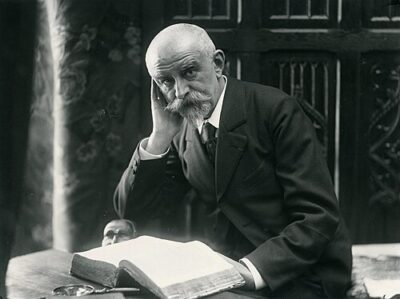
Joris-Karl Huysmans
Joris-Karl Huysmans was a French novelist and art critic. Born February 5, 1848, in Paris. Died May 12, 1907, in Paris. Known for Là-Bas and À rebours. Educated at Lycée Saint-Louis. Awards include Officer of the Legion of Honour and Knight of the Legion of Honour.
Facts
21 facts · 2 confirmed by two sources · 10 cited · 9 from one source
Where this comes from
Papalocal keeps its own record. It started from these sources; what each one said is kept here as it was copied, so a change on their side never changes this page by itself. Tap one to read its version.
What Wikidata says · copied November 16, 2026 · revision 2564661760
- Described as
- French novelist and art critic (1848–1907)
- Other names
- Jorris-Karl Huysmans, J.-K. Huysmans, Jaris-Karl Huysmans, Charles-Marie-Georges Huysmans, Joris Karl Huysmans
- Born
- February 5, 1848 · 19 references
- Died
- May 12, 1907 · 19 references
- Born in
- Paris · 3 references
- Died in
- Paris · 2 references
- Buried in
- Montparnasse Cemetery
- Cause of death
- lip and oral cavity carcinoma
- Name at birth
- Charles-Marie-Georges Huysmans · 1 reference
- Citizen of
- France · 1 reference
- Occupation
- writer · 3 references; art critic · 1 reference; novelist; author · 1 reference; literary critic · 1 reference
- Worked for
- Ministry of the Interior (1866–)
- Education
- Lycée Saint-Louis
- Member of
- Académie Goncourt
- Known for
- Là-Bas; À rebours
- Awards
- Officer of the Legion of Honour (1907) · 1 reference; Knight of the Legion of Honour (1893) · 1 reference
- Religion
- Catholicism
- Wikipedias with a page
- 60
Wikidata item Q210798 (wikidata.org/wiki/Q210798), public domain (CC0). Copied November 16, 2026.
What Wikipedia says · copied November 16, 2026 · revision 1376730991
Charles-Marie-Georges Huysmans (US: , French: [ʃaʁl maʁi ʒɔʁʒ ɥismɑ̃s]; 5 February 1848 – 12 May 1907) was a French novelist and art critic who published his works as Joris-Karl Huysmans (French: [ʒɔʁis kaʁl -], abbreviated as J. K. or J.-K.). He is most famous for the novel À rebours (1884, published in English as Against the Grain and as Against Nature). He supported himself by way of a 30-year career in the French civil service.
Huysmans's work is considered remarkable for its idiosyncratic use of the French language, large vocabulary, descriptions, satirical wit and far-ranging erudition. First considered part of Naturalism, he became associated with the Decadent movement with his publication of À rebours. His work expressed his deep pessimism, which had led him to the philosophy of Arthur Schopenhauer. In later years, his novels reflected his study of Catholicism, religious conversion, and becoming an oblate. He discussed the iconography of Christian architecture at length in La cathédrale (1898), set at Chartres and with its cathedral as the focus of the book.
Huysmans' novel Là-bas (1891) concerns the novelist Durtal, who researches Satanism and the 15th-century child-murderer Gilles de Rais. It was followed by the Durtal trilogy, comprising En route (1895), La cathédrale (1898), and L'Oblat (1903), in which Durtal takes a spiritual journey and eventually converts to Catholicism; in L'Oblat, he becomes an oblate in a monastery, as Huysmans himself was in the Benedictine Abbey at Ligugé, near Poitiers, in 1901. La cathédrale was his most commercially successful work. Its profits enabled Huysmans to retire from his civil service job and live on his royalties.
- Born, in its opening lines
- February 5, 1848
- Died, in its opening lines
- May 12, 1907
From the Wikipedia article “Joris-Karl Huysmans” (en.wikipedia.org/wiki/Joris-Karl_Huysmans), by its contributors, under CC BY-SA 4.0 (creativecommons.org/licenses/by-sa/4.0/). Copied November 16, 2026; not changed.
Confirmed Two sources agree. Cited One source, and it names where it got it. One source One source, without a reference of its own. Sources disagree The sources disagree. We show the best-supported value and keep theirs below.
