
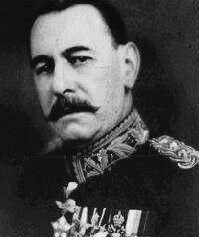
José Félix Uriburu
José Félix Uriburu was a former de facto President of Argentina. Born July 20, 1868, in Salta. Died April 29, 1932, in Paris. Positions held include President of Argentina (1930–1932).
Facts
12 facts · 2 confirmed by two sources · 3 cited · 7 from one source
Where this comes from
Papalocal keeps its own record. It started from these sources; what each one said is kept here as it was copied, so a change on their side never changes this page by itself. Tap one to read its version.
What Wikidata says · copied November 16, 2026 · revision 2567097473
- Described as
- former de facto President of Argentina (1868-1932)
- Other names
- Jose Felix Uriburu
- Born
- July 20, 1868 · 3 references
- Died
- April 29, 1932 · 4 references
- Born in
- Salta
- Died in
- Paris · 1 reference
- Buried in
- Recoleta Cemetery
- Cause of death
- stomach cancer
- Citizen of
- Argentina
- Occupation
- military personnel · 1 reference; politician · 1 reference
- Positions held
- President of Argentina (1930–1932)
- Political party
- Nationalist Liberation Alliance
- Military rank
- lieutenant general
- Wikipedias with a page
- 33
Wikidata item Q363555 (wikidata.org/wiki/Q363555), public domain (CC0). Copied November 16, 2026.
What Wikipedia says · copied November 16, 2026 · revision 1384366011
José Félix Benito Uriburu (20 July 1868 – 29 April 1932) was an Argentine military officer and politician, he was the President of the Provisional Government of Argentina, ousting the successor to President Hipólito Yrigoyen by means of a military coup and declaring himself president. From 6 September 1930 to 20 February 1932, he controlled both the Executive and Legislative branches of government. As "President of the Provisional Government," he acted as the de facto Head of state of Argentina. His was the first of a series of successful coups d'état and unconstitutional governments that came to power in 1943, 1955, 1962, 1966, and 1976.
Uriburu's coup was supported by the Nacionalistas, a far-right Argentine nationalist movement that around 1910 grew out of the "traditionalist" position, which was based on nostalgia for feudal economic relations and a more "organic" social order.
In the aftermath of the coup, major changes to Argentine politics and government took place, with Uriburu banning political parties, suspending elections, and suspending the 1853 Constitution. Uriburu proposed that Argentina be reorganized along corporatist and fascist lines.
- Born, in its opening lines
- July 20, 1868
- Died, in its opening lines
- April 29, 1932
From the Wikipedia article “José Félix Uriburu” (en.wikipedia.org/wiki/José_Félix_Uriburu), by its contributors, under CC BY-SA 4.0 (creativecommons.org/licenses/by-sa/4.0/). Copied November 16, 2026; not changed.
Confirmed Two sources agree. Cited One source, and it names where it got it. One source One source, without a reference of its own. Sources disagree The sources disagree. We show the best-supported value and keep theirs below.
