
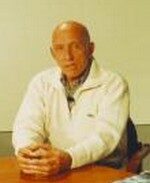
José Giovanni
José Giovanni was a film director. Born June 22, 1923, in 8th arrondissement of Paris. Died April 24, 2004, in Lausanne. Educated at Collège Stanislas de Paris and Lycée Janson-de-Sailly. Awards include Paul Léautaud Prize.
Facts
20 facts · 2 confirmed by two sources · 9 cited · 9 from one source
Where this comes from
Papalocal keeps its own record. It started from these sources; what each one said is kept here as it was copied, so a change on their side never changes this page by itself. Tap one to read its version.
What Wikidata says · copied November 18, 2026 · revision 2569058952
- Described as
- film director (1923-2004)
- Other names
- Jose Giovanni, Joseph Damiani
- Born
- June 22, 1923 · 4 references
- Died
- April 24, 2004 · 4 references
- Born in
- 8th arrondissement of Paris · 3 references
- Died in
- Lausanne · 1 reference
- Cause of death
- cerebral hemorrhage
- Name at birth
- Joseph Antoine Roger Damiani · 1 reference
- Citizen of
- France; Switzerland
- Occupation
- film director · 1 reference; screenwriter; novelist; writer · 1 reference; film actor · 1 reference; actor · 1 reference; director · 1 reference
- Political party
- French Popular Party
- Education
- Collège Stanislas de Paris; Lycée Janson-de-Sailly
- Awards
- Paul Léautaud Prize (1995) · 1 reference
- Siblings
- Paul Damiani · 1 reference
- Wikipedias with a page
- 22
Wikidata item Q115754 (wikidata.org/wiki/Q115754), public domain (CC0). Copied November 18, 2026.
What Wikipedia says · copied November 18, 2026 · revision 1379233685
Joseph Damiani (22 June 1923 – 24 April 2004), known by the pen name José Giovanni, was a French writer, filmmaker, and convicted criminal. He became known for his realistic, gritty crime novels which drew upon his own personal experiences and knowledge of the French underworld.
As a young man, Giovanni was a fascist activist and Nazi collaborator during World War II, also becoming affiliated with organized crime during the same period. In 1948, he received the death penalty for his involvement in a murder case, though the sentence was commuted. Following his release from prison, Giovanni became a popular author of crime fiction beginning in the 1960s. Several of his novels were adapted into films by directors like Jacques Becker, Jean-Pierre Melville, and Claude Sautet. Giovanni also wrote original screenplays, and eventually turned to directing, helming some 17 films between 1967 and 2001. Many films written or directed by Giovanni, as well as films adapted from his books, were box-office successes, and some came to be regarded as classics of French cinema.
Giovanni's works often praise masculine friendships and advocated the confrontation of the individual against the world. Though he never concealed his criminal past, he was always careful to hide his links with the Nazi occupiers of France during World War II. His past as a collaborator was eventually exposed in 1993 by the Swiss newspapers Tribune de Genève and 24 Heures.
- Born, in its opening lines
- June 22, 1923
- Died, in its opening lines
- April 24, 2004
From the Wikipedia article “José Giovanni” (en.wikipedia.org/wiki/José_Giovanni), by its contributors, under CC BY-SA 4.0 (creativecommons.org/licenses/by-sa/4.0/). Copied November 18, 2026; not changed.
Confirmed Two sources agree. Cited One source, and it names where it got it. One source One source, without a reference of its own. Sources disagree The sources disagree. We show the best-supported value and keep theirs below.
