
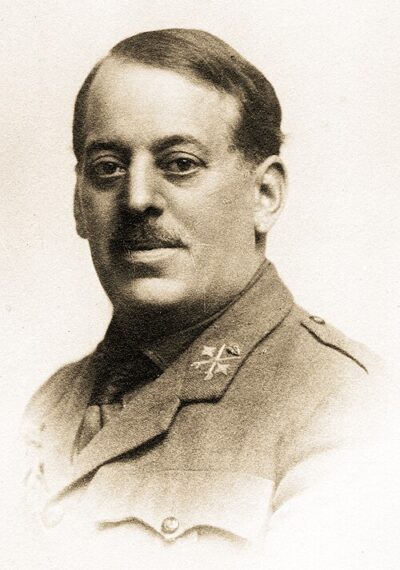
José Sanjurjo
José Sanjurjo was a Spanish military officer and 1936 coup leader. Born March 28, 1872, in Pamplona. Died July 20, 1936, in Estoril. Positions held include Director-General of the Civil Guard (1928–1932), High Commissioner of Spain to Morocco (2 times) (1925–1931) and Member of the Cortes republicanas (1931). Awards include Grand Cross of the Cross of Military Merit with Red Decoration, Grand Cross of Naval Merit with red badge and Knight Grand Cross of the Order of Saint Ferdinand.
Facts
26 facts · 2 confirmed by two sources · 15 cited · 9 from one source
What’s different
- Born: we show March 28, 1872 (Confirmed). Wikidata also lists March 18, 1872
Where this comes from
Papalocal keeps its own record. It started from these sources; what each one said is kept here as it was copied, so a change on their side never changes this page by itself. Tap one to read its version.
What Wikidata says · copied November 16, 2026 · revision 2567498062
- Described as
- Spanish military officer and 1936 coup leader (1872–1936)
- Other names
- Jose Sanjurjo, Jose Sanjurjo Sacanell
- Born
- March 28, 1872 · 1 reference; March 18, 1872 · 1 reference
- Died
- July 20, 1936 · 3 references
- Born in
- Pamplona · 3 references
- Died in
- Estoril · 1 reference
- Buried in
- Monumento A Los Caídos (1961–2016) · 1 reference; Pantheon of Regulares 2 (2017–) · 1 reference
- Cause of death
- aviation accident
- Citizen of
- Spain · 1 reference
- Occupation
- military officer; military personnel · 1 reference; politician · 2 references
- Positions held
- Director-General of the Civil Guard (1928–1932) · 1 reference; High Commissioner of Spain to Morocco (2 times) (1925–1931) · 2 references; Member of the Cortes republicanas (1931) · 1 reference; Member of the Consultative National Assembly (1928–1930) · 1 reference; director general (1932) · 1 reference; general commander of Melilla (1921–1922) · 2 references
- Awards
- Grand Cross of the Cross of Military Merit with Red Decoration (1921) · 1 reference; Grand Cross of Naval Merit with red badge (1926) · 1 reference; Knight Grand Cross of the Order of Saint Ferdinand (1927) · 1 reference; Grand Cross of the Royal and Military Order of Saint Hermenegild (1926) · 1 reference; Grand Cross of the Order of Wissam Alaouite (1926) · 1 reference
- Father
- Justo Sanjurjo Bonrostro
- Military branch
- Spanish Army · 1 reference
- Military rank
- lieutenant general; general · 1 reference
- Wikipedias with a page
- 34
Wikidata item Q436763 (wikidata.org/wiki/Q436763), public domain (CC0). Copied November 16, 2026.
What Wikipedia says · copied November 16, 2026 · revision 1381192802
José Sanjurjo y Sacanell (Spanish: [saŋˈxuɾxo]; 28 March 1872 – 20 July 1936) was a Spanish military officer and aristocrat who was one of the military leaders who plotted the July 1936 coup d'état that started the Spanish Civil War.
He was endowed the nobiliary title of "Marquis of the Rif" in 1927.
A monarchist opponent of the Second Spanish Republic proclaimed in 1931, he led a coup d'état known as la Sanjurjada in August 1932. The authorities easily suppressed the coup and initially condemned Sanjurjo to death, then later commuted his sentence to life imprisonment. The government of Alejandro Lerroux—formed after the 1933 general election—eventually amnestied him in 1934.
He took part, from his self-exile in Portugal, in the military plot for the 1936 coup d'état. Following the coup, Sanjurjo, expected by some to become the commander-in-chief of the Nationalist faction, died in an air crash on the third day of the war, when travelling back to Spain. He had chosen to fly in a small, overloaded plane, because the pilot was a friend of his. Sabotage was suspected,
but never proven.
- Born, in its opening lines
- March 28, 1872
- Died, in its opening lines
- July 20, 1936
From the Wikipedia article “José Sanjurjo” (en.wikipedia.org/wiki/José_Sanjurjo), by its contributors, under CC BY-SA 4.0 (creativecommons.org/licenses/by-sa/4.0/). Copied November 16, 2026; not changed.
Confirmed Two sources agree. Cited One source, and it names where it got it. One source One source, without a reference of its own. Sources disagree The sources disagree. We show the best-supported value and keep theirs below.
